How to Evaluate an Online Teacher for Young Children
When choosing an online teacher for kids, watch how the teacher responds during a sample lesson. Look for a teacher who explains one clear task, gives your child time to respond, and changes the explanation when your child gets stuck. Ask about relevant experience and how the provider verifies it, then use a real lesson example to see what those credentials mean for your child.
A four-part teacher interview scorecard
Ask each teacher the same four questions. Mark what you observed, what you heard described, and what you still need to check. A useful comparison records the example behind each mark.
| What to check | Ask this | Look for this in a sample |
|---|---|---|
| Experience with the age and skill | “What would a first lesson on this skill look like? How has your experience prepared you to teach it?” | A manageable starting task and an explanation that connects to what your child already knows. |
| Participation | “How can a child answer if they need extra time or prefer to point or show work?” | A visible turn and enough time to respond. |
| Feedback and adjustment | “Can you show what you’d do if the first explanation didn’t work?” | A specific clue followed by a second chance to try, with a different example if needed. |
| Communication with families | “How will you explain what my child practiced and what we can try next?” | A concrete observation and a reasonable next step. |
This is a Kids Online Lessons editorial checklist. It uses observable moments from the first lesson to help families compare options.
What useful feedback sounds like
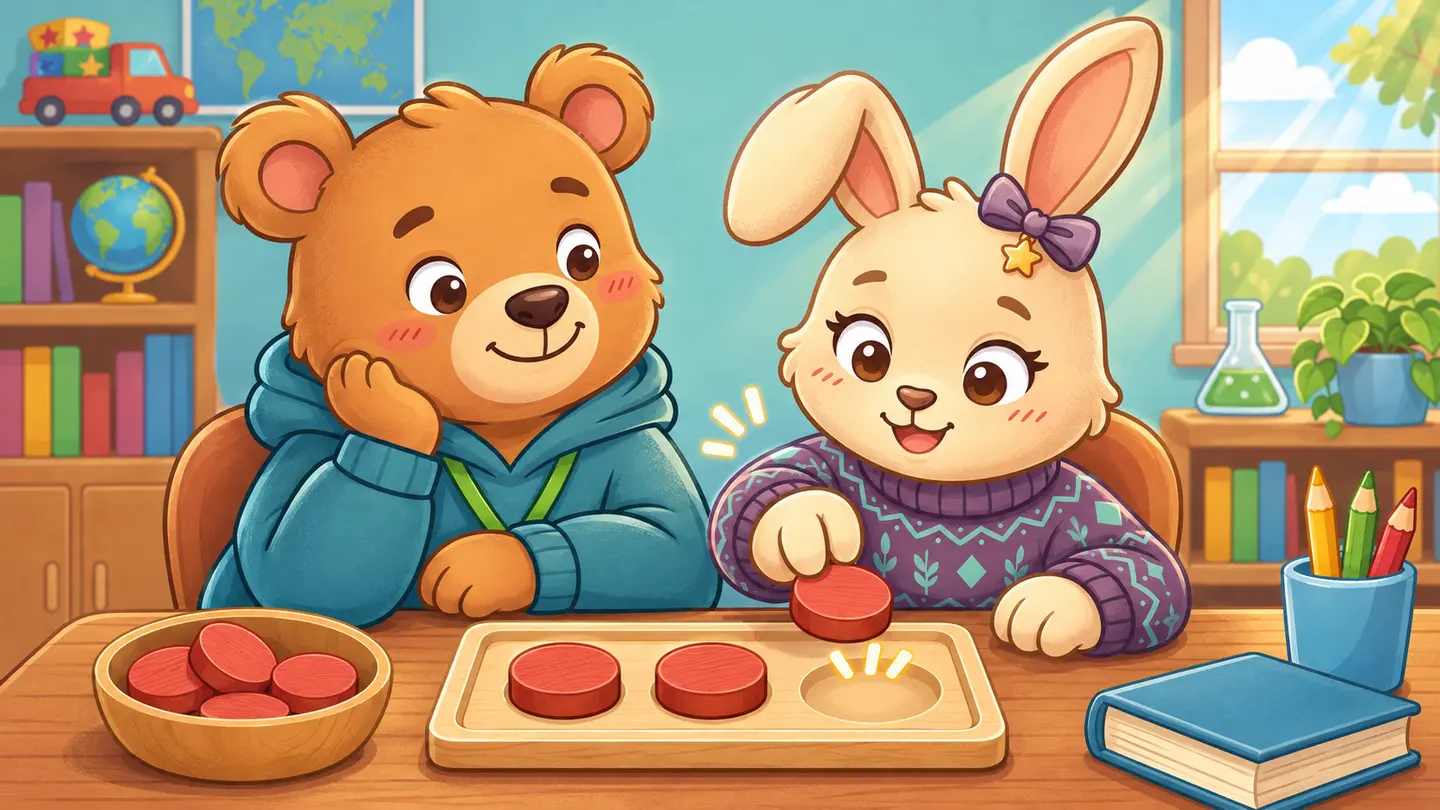
Suppose a child says that a group of nine counters makes ten. A teacher might respond, “You filled this row. Look at the last space in the other row. What could go there?” After the child adds a counter, the teacher offers a new arrangement and sees whether the child checks the total. That sequence gives you an example of feedback you can write in one line.
Check the provider’s policies
Ask the provider what it verifies about the teacher’s training, experience, and any screening it describes. Confirm who sees a child’s name or video, whether lessons are recorded, whether an adult can be nearby, and how a family can raise a concern. Ask for written policies if the answers are unclear.
Decide after the sample
Write down what your child attempted, what they did with help, and what the teacher changed during the lesson. Ask your child what they would like to try again. If the sample still leaves a question about fit, ask the teacher to describe how a second lesson would build on what you saw.
Compare small-group and one-to-one lessons or check your child’s readiness.
Join the waitlist for updates from Kids Online Lessons.