KidsOnlineLessons Team · November 12, 2026
Second Grade Reading Comprehension With Cause and Effect
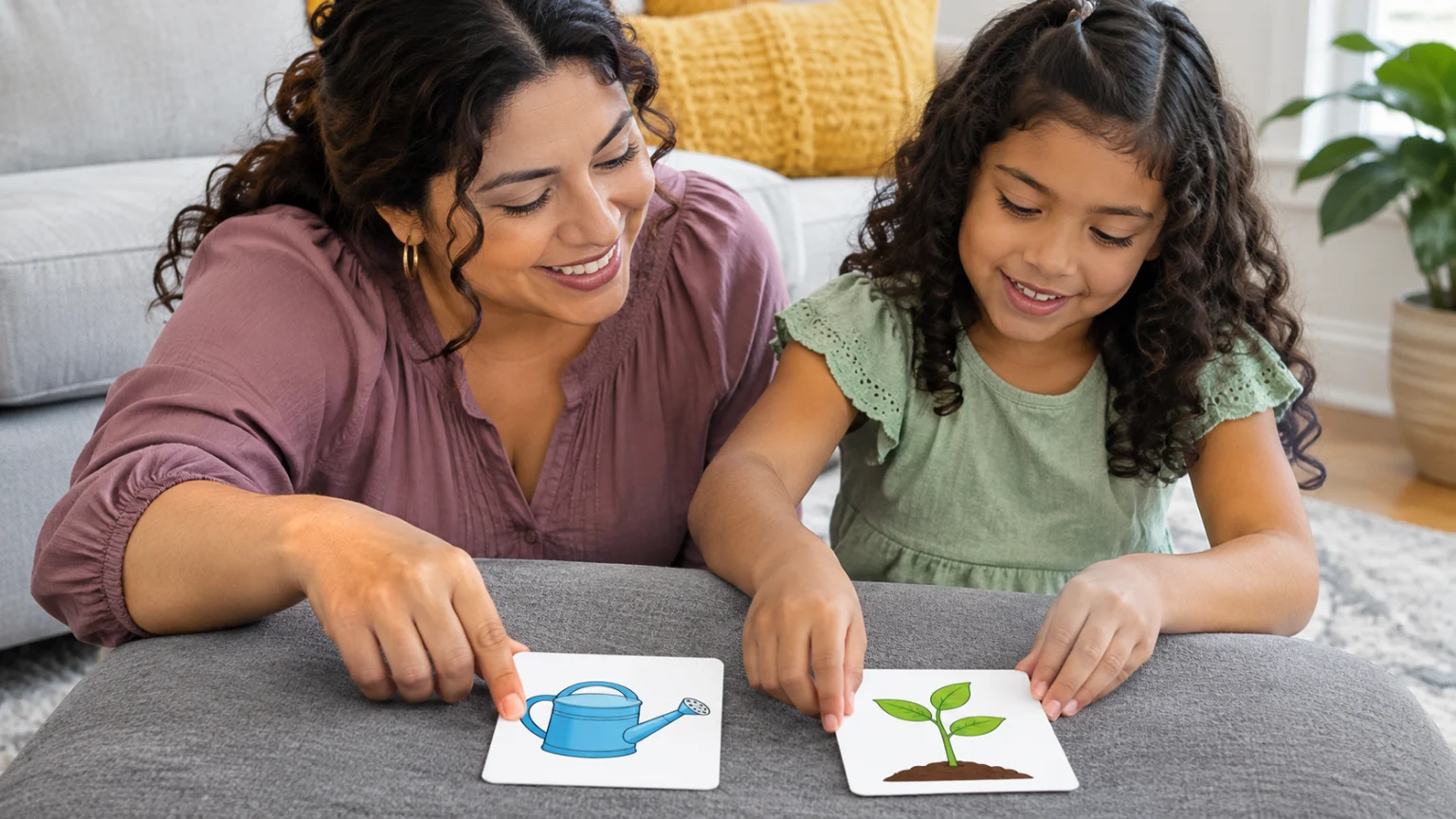
A child may retell what happened in a story without explaining why it happened. Cause-and-effect reading asks a second grader to connect an event with what led to it. The effect is what happened; the cause helps explain why.
Start with a short passage containing one clear connection. You can practice through conversation before expecting written answers. The goal is thoughtful explanation supported by the text, rather than searching for a particular clue word and stopping there.
Begin with a familiar everyday connection
Say, “The floor was wet because someone spilled water.” Ask what happened, then ask why. Draw two boxes and sketch a tipped cup in the first and a puddle in the second. Add an arrow showing the relationship.
Explain that the spill is the cause and the wet floor is the effect. Reverse the sentence: “Someone spilled water, so the floor became wet.” The relationship stays the same even though the wording changes.
Give your child another familiar example, such as a closed umbrella getting opened when rain begins. Invite them to explain the connection in their own words. Accept an ordinary spoken explanation before adding the formal labels.
Find evidence in a short reading passage
Try this mini passage: “Mina left her paper kite outside. Rain soaked the paper overnight. In the morning, the paper tore when she lifted it.” Read it together, then ask why the kite’s paper tore.
Your child might answer, “It was wet.” Ask which sentence helped them know that. Pointing to the rain-soaked paper links the explanation to evidence. Discuss how the earlier choice to leave the kite outside also belongs to the chain of events.
Use a few focused prompts:
- “What happened to the paper?”
- “What made that happen?”
- “Which words support your explanation?”
- “What happened before that?”
If your child offers a possible cause that the passage does not mention, distinguish possibility from evidence. Wind could damage a kite, but this passage describes rain.
Look beyond signal words and single answers
Words such as “because” and “so” can make relationships easier to notice. However, writers do not always state a cause directly. Readers sometimes connect details across sentences, as in the kite example.
Also explain that one event can have more than one cause. A character may be late because a bus was delayed and because they left home later than planned. For early practice, choose a simple connection before exploring several contributing causes.
End by asking your child to complete an evidence-based sentence: “The paper tore because…” Let them say it aloud or write it, depending on their energy. A clear explanation matters more than filling a page.
Notice cause-and-effect connections in your next shared story or nonfiction reading. For guided comprehension activities that build on these conversations, visit KidsOnlineLessons and sign up for a second grade learning path.