
KidsOnlineLessons Team · November 15, 2026
Preschool Scissor Readiness With Paper Tearing
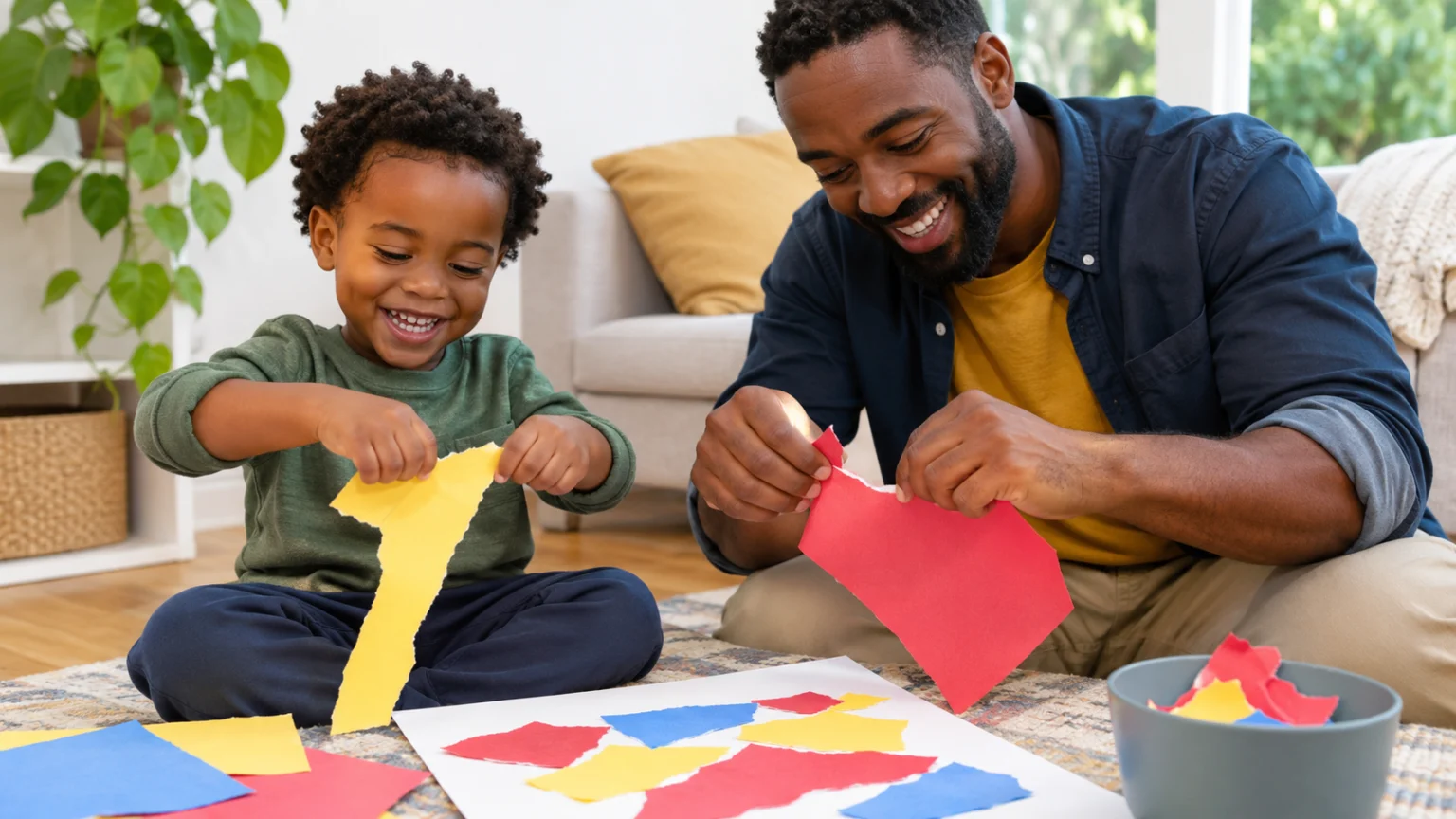
Before scissors feel manageable, your preschooler can explore how two hands work together to change a material. Paper tearing offers an accessible activity: one hand holds while the other pulls, and the child sees an immediate result. It is a useful kind of hand play, though it does not replace learning to use scissors with direct adult supervision.
Gather a few sheets of ordinary paper and a large sheet for a collage. Avoid paper with staples or sharp edges. Stay beside your child and keep torn scraps out of mouths.
Start a tear so the movement is visible
Hold a sheet in both hands and make a small tear at the top. Place one hand on either side of the opening. Pull gently in opposite directions so your child can see how the paper separates.
Offer a sheet with a tear already started. Ask your child to hold close to the opening rather than far down the page. You can say, “This hand holds. This hand pulls.” Let them experiment with which hand takes each role.
If they crumple the paper instead, describe what happened and offer another started edge. Crumpling is also exploration; you can return to tearing without treating the first attempt as a failure.
Build a collage from manageable pieces
Tear wide strips first, then invite your child to make a few shorter pieces. Thin tissue and thick card behave differently, so begin with paper that tears without excessive force. Try a different type only when the first feels comfortable.
Spread the pieces on a large sheet and let your child arrange them into a road, a garden, or an abstract picture. Use an age-appropriate glue stick with supervision if they want to keep the design.
Offer purposeful choices:
- Tear a long strip for a path.
- Make small pieces to fill a large shape you draw.
- Compare a straight tear with a curved one.
- Choose colors that create a simple pattern.
Avoid expecting identical pieces or a tidy outline. The activity is about controlling an action and making choices, rather than matching an adult’s finished example.
Notice coordination and adjust the challenge
Watch how your child positions both hands. Do they move their grip closer to the tear when needed? Can they hold the paper steady while pulling? These observations help you choose the next small challenge.
If the task becomes frustrating, shorten the paper or provide more started tears. Take a break when hands tire. Later scissor practice will need its own demonstration of grip, opening and closing, and safe handling with child-appropriate scissors.
Finish by gathering scraps together. Keeping the workspace cared for gives the activity a useful ending and respects shared materials. You can save larger leftover pieces for another project. For more parent-guided fine motor activities with meaningful creative goals, visit KidsOnlineLessons and sign up for a preschool learning path.