
KidsOnlineLessons Team · November 12, 2026
Preschool Fine Motor Practice With Playdough Snakes
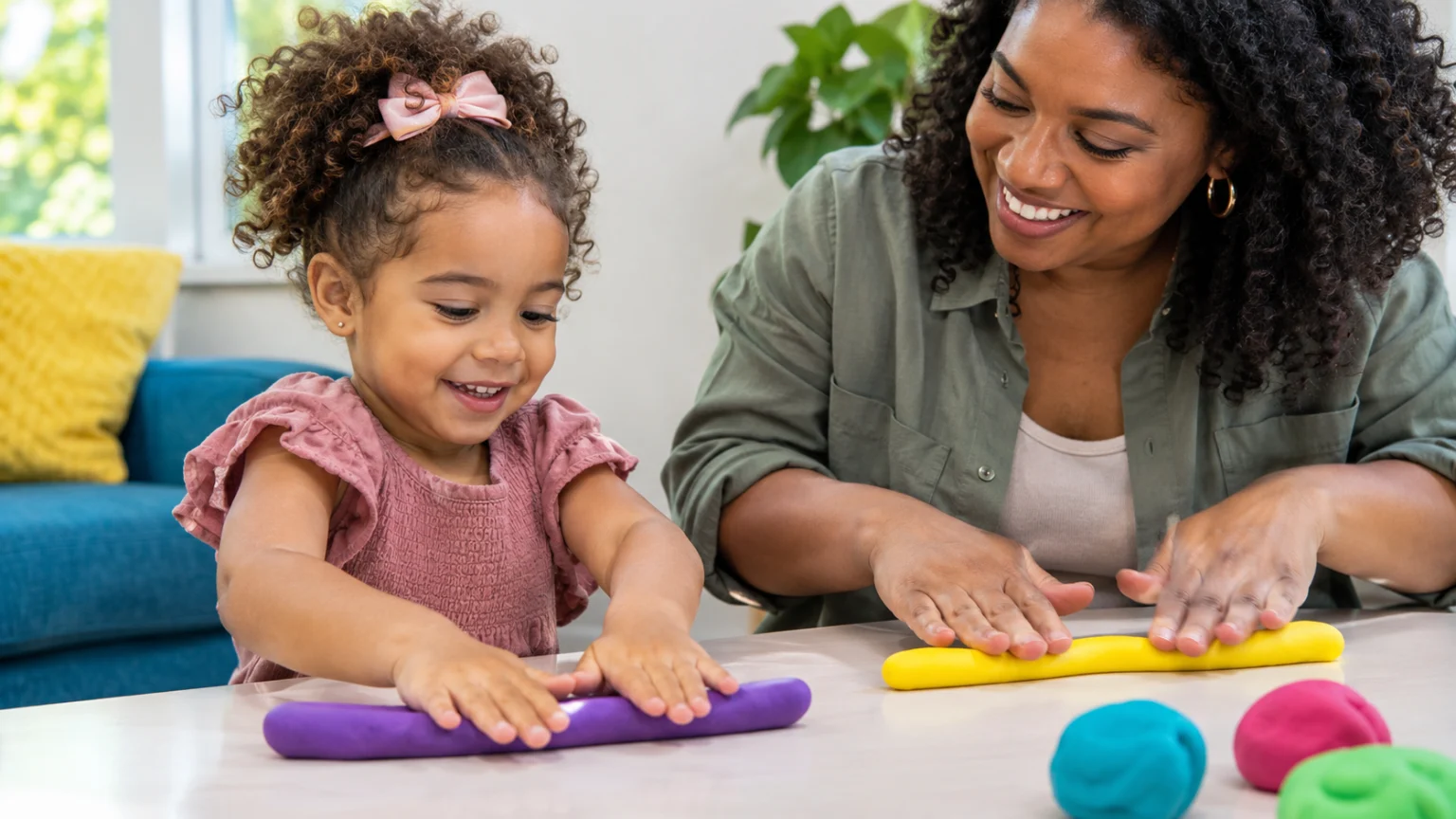
When your preschooler presses playdough flat instead of rolling a neat snake, they are still exploring how their hands change a material. Fine motor practice does not need a perfect finished shape. A simple playdough snake activity lets children experiment with pressure, coordination, and purposeful movement while creating something they can use in pretend play.
Choose child-safe playdough and check ingredients for relevant allergies. Remind your child that the dough stays out of mouths. Sit together at a washable table with room for elbows and a small amount of dough each.
Model rolling with a comfortable starting piece
Give your child a soft piece that fits easily between their palms. A very large lump can be difficult to move, while a tiny piece may invite pinching rather than rolling. Show how to press the dough gently against the table and move both hands forward and back.
Say, “My hands are making it longer.” Keep your first example short and thick. Your child may copy the movement, squash the dough, or roll with one hand. Describe the result: “That part became flatter,” or “You made a long piece.”
If the dough feels stiff, soften it yourself before handing it over. The task should offer manageable resistance, rather than a struggle that quickly exhausts their hands.
Turn shaping into a small creative challenge
Invite your child to make a snake that can curl around a pretend rock. Use a large block as the rock, or simply mark a space on the table. Help them bend their rolled piece into a curve without pressing it flat.
Then compare a short snake with a long one. Ask what they could change to make one longer. Rolling stretches the same dough into a thinner shape; adding dough changes the amount too. You can explore both without requiring a formal explanation.
Offer a few choices:
- Curl a snake into a spiral.
- Make a thick snake and a thin snake.
- Join two pieces and smooth the connection.
- Create a pretend path for a large toy animal.
Let your child choose which idea interests them. Purposeful play often invites more repetition than asking for many identical shapes.
Adjust the task and notice hand control
If rolling is frustrating, begin by pressing dough with a flat palm. You can also roll side by side while your child watches. Avoid taking over their piece to make it match yours.
Notice the actions becoming more intentional: placing both hands on the dough, changing pressure, or bending a piece where they planned. These observations are more useful than comparing your child’s finished snake with another child’s work.
Stop when their hands seem tired or interest fades. Save the dough in its container together, caring for materials so they can be used again. For more creative activities that connect fine motor practice with early learning, visit KidsOnlineLessons and sign up for a guided preschool learning path.