KidsOnlineLessons Team · November 20, 2026
Preschool Color Mixing With Washable Paint
Your preschooler may know the names of several colors without having explored what happens when paints combine. Color mixing gives them a visible change to investigate. A prediction, a small test, and a careful look at the result can turn a familiar art activity into an early science conversation.
Choose age-appropriate washable paint and check the product directions. Cover the work surface and keep paint away from mouths and eyes. Begin with two colors and a large mixing space rather than offering every pot at once.
Make a prediction before the colors meet
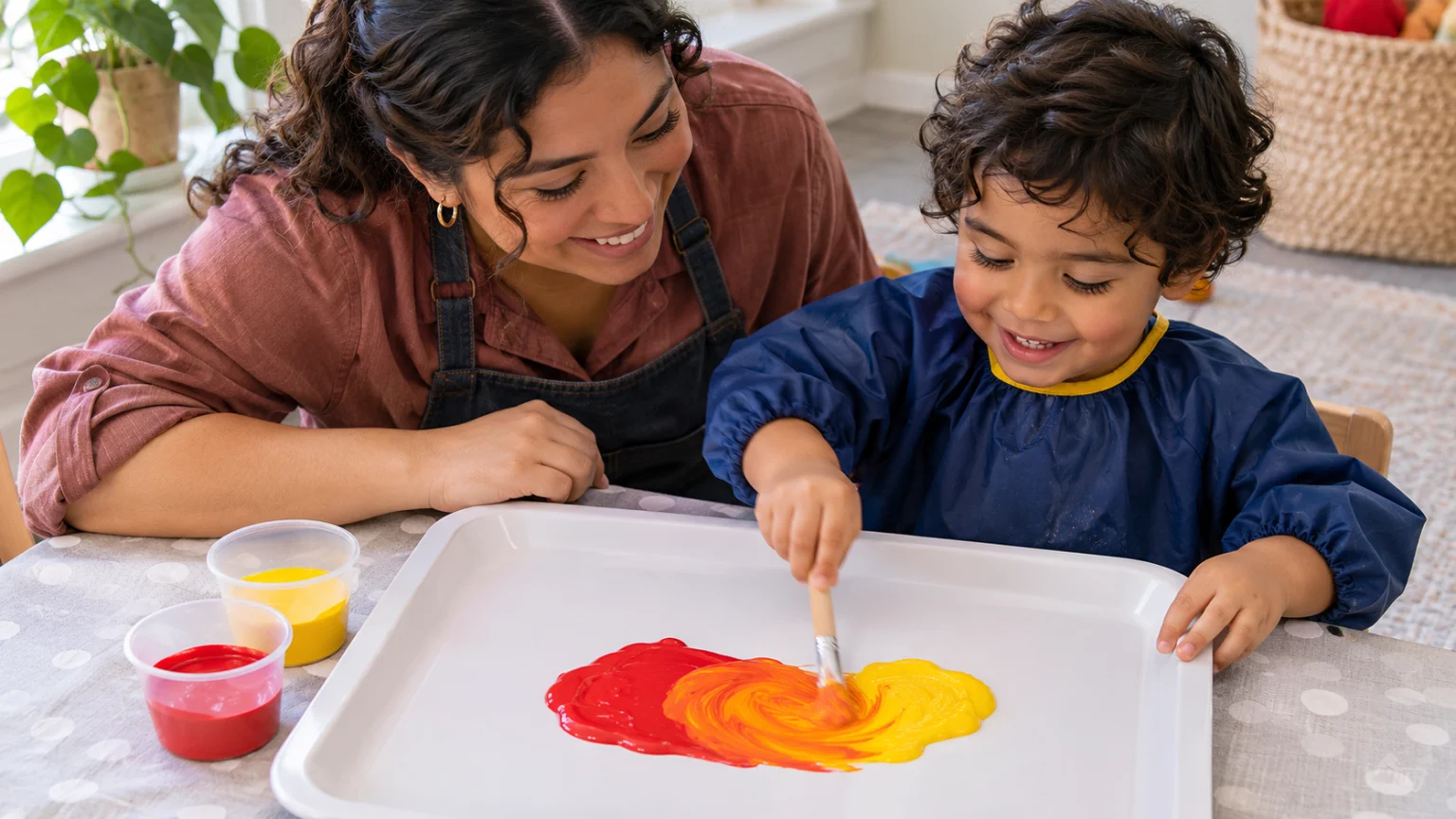
Put a small amount of red paint on one side of a tray and yellow on the other. Name both colors, then ask, “What do you think might happen if we mix a little of each?” Accept any prediction without announcing whether it is correct.
Use a brush or broad craft tool to bring a small amount of each into a clear area. Mix slowly and watch together. You will often get an orange shade, though the exact result depends on the paints and amounts used.
Describe the actual result rather than insisting it must match a particular color card. “This looks like a deep orange” is more accurate than correcting your child’s observation to fit a predetermined answer.
Compare amounts while keeping a reference sample
Leave a little of the first mixture untouched. In another space, combine more yellow with a smaller amount of red. Place the mixtures side by side and ask what your child notices.
They may describe one as brighter, lighter, or more yellow. Use those observations to discuss the changed amounts. You do not need exact measurements; a visible comparison is enough for the first exploration.
Try a simple investigation routine:
- Name the starting colors.
- Predict what mixing might do.
- Combine a small amount and observe.
- Compare the result with a second mixture.
Keep brushes or tools separate for unmixed colors if you want clean comparisons. If all colors blend together, describe that result honestly and offer fresh paint for another test.
Use the new colors in a purposeful picture
Invite your child to paint a garden, a sunset, or an abstract pattern with the mixtures they created. The investigation can lead into creative expression without requiring a copy of your example.
Ask where they would like each shade to go and why. A child might use orange for an imaginary animal or a sky that does not look realistic. The color experiment and the artistic choice serve different purposes, and both can be valued.
Finish by naming one observation your child made and cleaning the tools together. Save a small dried sample if they want to remember the mixture, noting that some paints change appearance as they dry. For more guided art and discovery activities, visit KidsOnlineLessons and sign up for a preschool learning path.