
KidsOnlineLessons Team · November 14, 2026
Kindergarten Teen Numbers With Ten and Some More
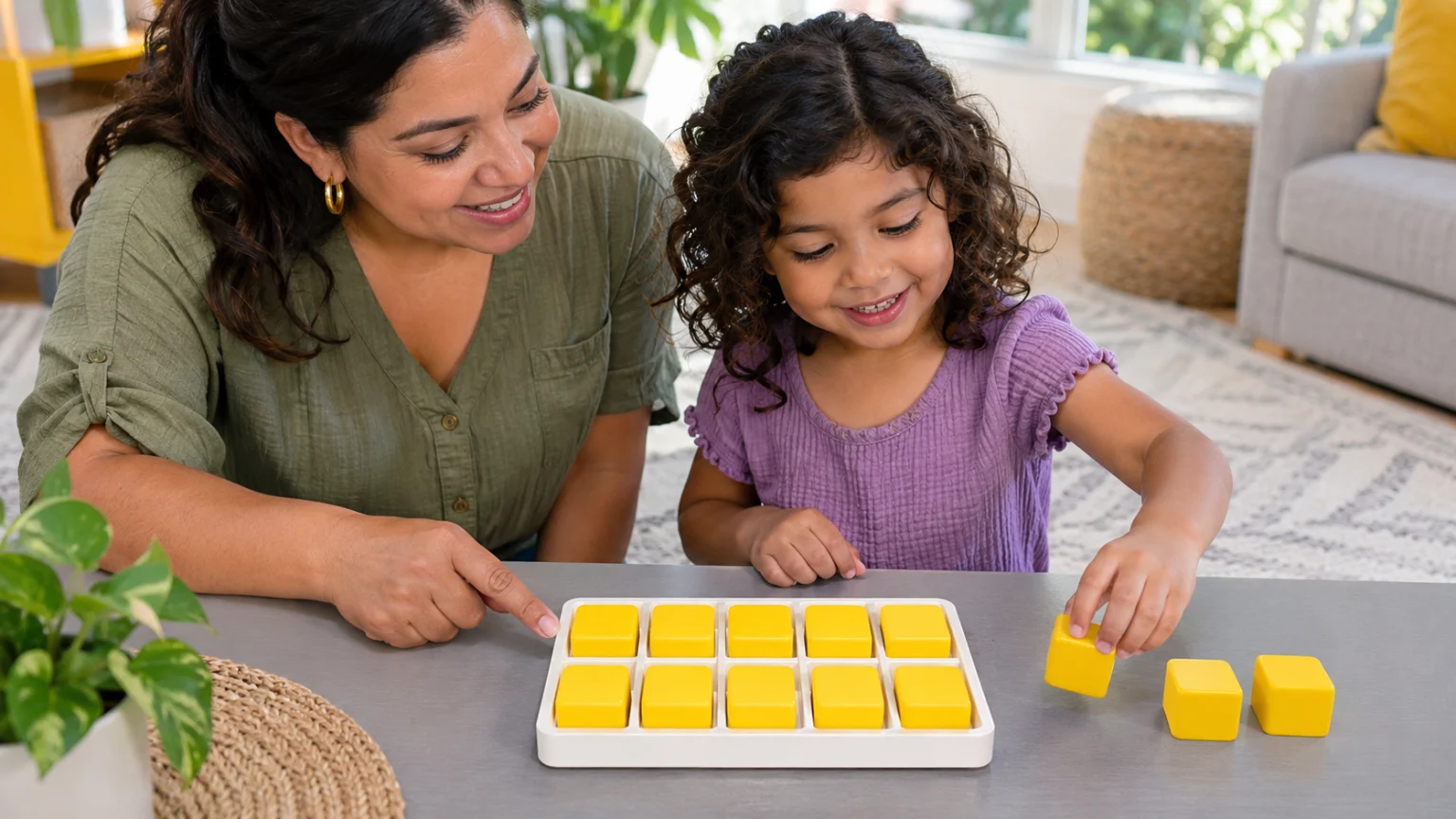
A kindergartener may count correctly to fourteen yet have trouble seeing fourteen as ten and four more. Teen-number activities help children connect the spoken number, its written form, and the quantity it represents. The important structure is one group of ten with some extra ones.
Use large counters or blocks appropriate for your child’s handling skills. A ten-frame drawn on paper provides a useful home for the first ten objects. Keep the extra ones beside it where your child can see and count them separately.
Build ten before adding the extra ones
Draw a ten-frame with two rows of five boxes. Help your child place one counter in each box, counting together. Say, “The frame is full. There are ten.” Leave the counters in place while you add four more beside the frame.
Ask your child how many counters are outside the frame. Then explain, “Ten and four more make fourteen.” Count the entire collection once if they want to check, and return to the grouped view afterward.
The frame is a tool for seeing structure, not a speed test. If your child recounts all the counters, let them. You can gradually model starting with the known ten and attending to the extra ones.
Connect the quantity with the written teen number
Write 14 below the model. Explain that the 1 represents one ten and the 4 represents four ones. Point to the full frame and then to the loose counters as you discuss each part.
Avoid saying the 1 simply “means one” without naming the unit. In this position it represents one ten. Clear language now helps prepare for later place-value work.
Try a few small changes:
- Remove one extra counter to make thirteen.
- Add two extra counters to make fifteen.
- Keep the frame full while changing only the loose ones.
- Ask your child to build a teen number you name.
For each model, say “ten and some more” before naming the whole number. Keep the amount within the teen range so the connection remains focused.
Compare models and explain what stays the same
Build twelve and seventeen in separate turns. Ask what stayed the same and what changed. The group of ten remains; the number of extra ones differs. Your child can point, draw, or explain aloud.
If they reverse digits while writing, return to the model and label its parts together. Reading and writing the numeral can require practice even when the quantity is understood. Treat those as related skills rather than assuming one error means all understanding is missing.
You can revisit the same number another day with different objects, checking whether the ten-and-ones structure still makes sense.
Finish by drawing a full ten-frame and a few extra dots for your child to name. For more guided early math practice connecting objects, pictures, and numbers, visit KidsOnlineLessons and sign up for a kindergarten learning path.