KidsOnlineLessons Team · November 16, 2026
How to Teach Toddlers More and All Done During Play
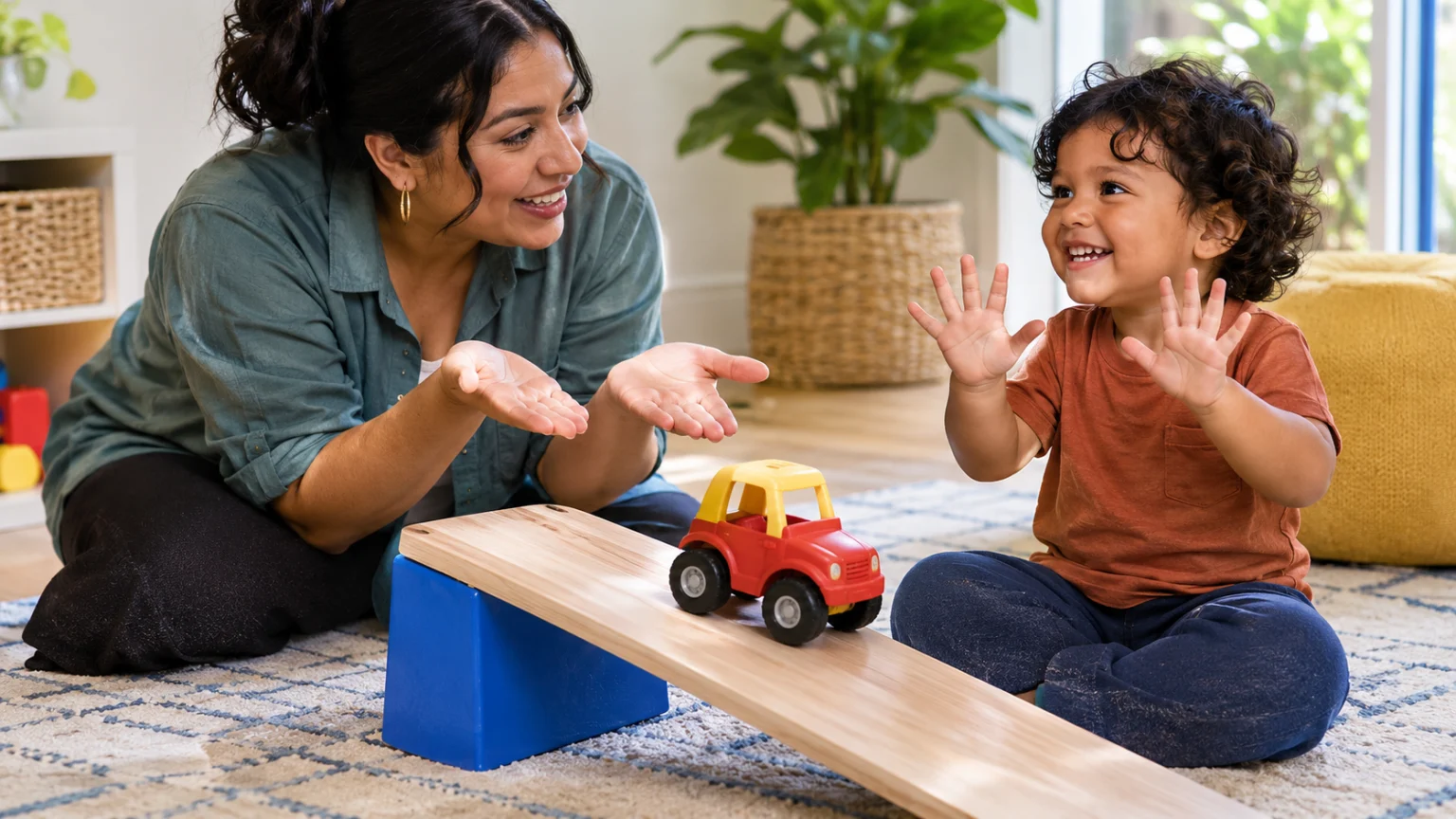
Your toddler may reach for a toy, push it away, or bring it back to you without saying a word. Those actions already communicate something. Practicing “more” and “all done” during play gives you a way to name their intentions and offer useful language for familiar moments.
Choose an activity you can pause naturally, such as rolling a large toy car down a short ramp. Keep the ramp low and the area clear. Your goal is to respond to your child’s message, whether it comes through movement, gesture, or speech.
Pair the words with something your child wants
Roll the car once, then wait with your hands relaxed. If your toddler reaches toward the ramp, say, “More car?” and offer another turn. You can use a simple gesture your family already understands while saying the words.
After several turns, pause again. Look for your child’s response rather than immediately filling the silence. A glance between you and the car, a reach, or an excited sound may tell you they want the action repeated.
Model “more” as part of a real exchange, not as a password your child must produce. Give the next turn when their intention is clear. Holding a desired toy out of reach until they copy you can turn communication practice into frustration.
Make all done a useful message too
When your child turns away, sets the car down, or moves to another toy, say, “All done with the car.” Put it aside without insisting on one last turn. Respecting that message helps the phrase mean something reliable.
You can also model your own ending: “I am all done rolling. The car can rest here.” If your toddler wants to continue independently and it is safe, leave space for that choice.
Try these responsive turns:
- Offer “More?” after a favorite action stops.
- Name “All done” when your child clearly disengages.
- Accept a familiar gesture instead of waiting for speech.
- Offer two visible activities when their message is unclear.
A child may return to the game after leaving it. You can say, “You want more car again,” without treating the earlier ending as a mistake.
Use the same language across everyday play
Bring the phrases into stacking blocks, sharing songs, or looking at a picture book. Keep the meaning consistent: more continues an activity, while all done ends or pauses it.
If your child uses one word for several meanings, look at the context and respond to the likely intention. You can add a short model: “More blocks,” or “All done singing.” There is no need to demand a longer phrase before responding.
Notice whether your toddler begins communicating an ending more clearly or inviting another turn in a new setting. These are useful changes even when pronunciation remains approximate. For more parent-guided language activities rooted in responsive play, visit KidsOnlineLessons and sign up for a toddler learning path.