KidsOnlineLessons Team · November 16, 2026
How to Teach Second Graders to Use Context Clues
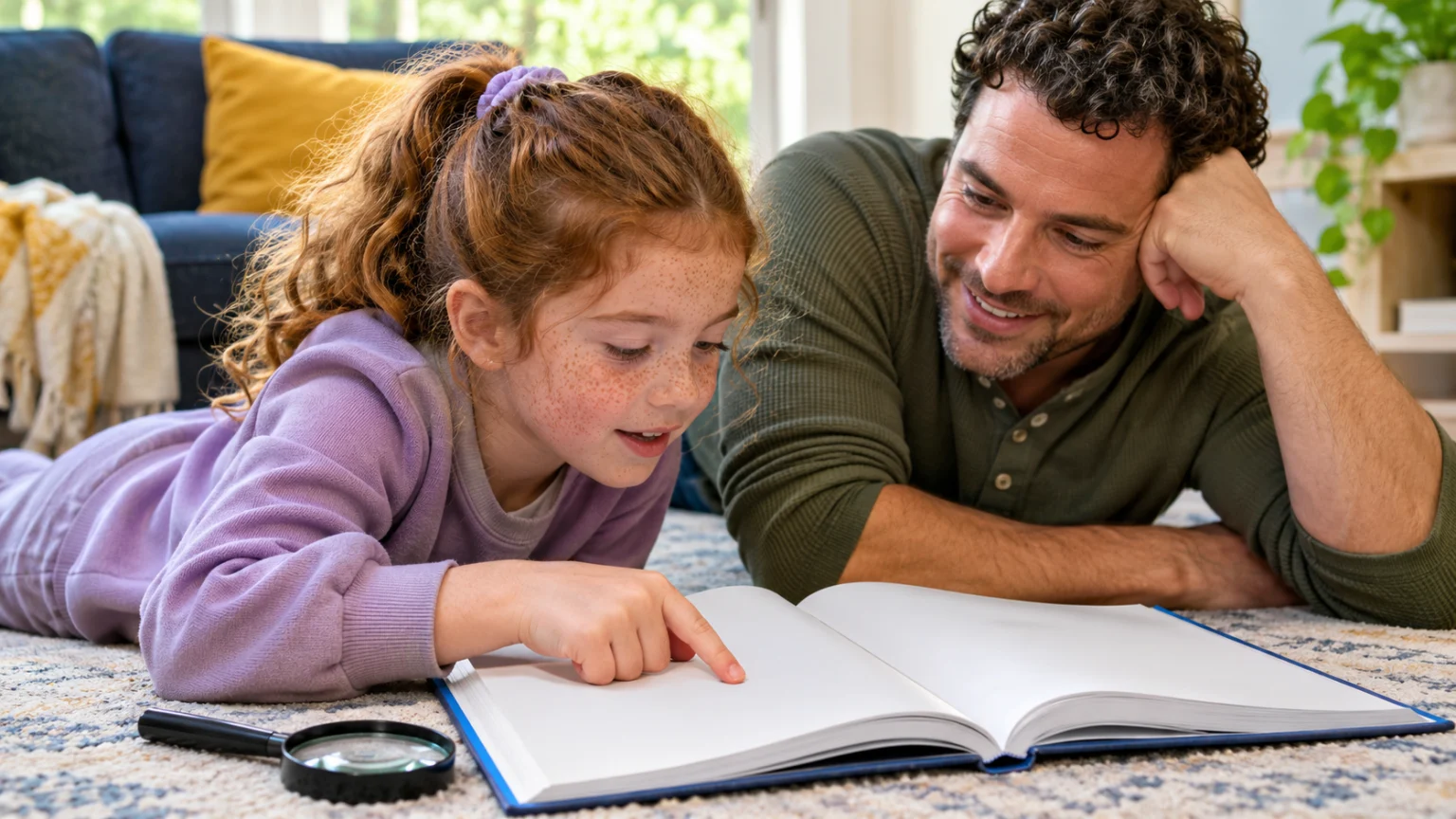
When your second grader meets an unfamiliar word, “Look at the context” may not tell them what to do. Context clues are useful only when a child knows how to inspect nearby information and test a possible meaning. Sometimes the text provides enough support; sometimes it does not.
Begin with a short passage you can read together. If your child cannot decode the unfamiliar word, help them pronounce it first. Working out the written word and working out its meaning are related tasks, but one should not be mistaken for the other.
Look for information that explains the word
Try this sentence: “The trail was narrow, with space for only one person to walk at a time.” Ask what “narrow” might mean. The phrase about space gives a useful clue that the trail is not wide.
Have your child point to the exact words that helped. Then substitute a plain explanation: “The trail was not wide.” Read the whole sentence again and ask whether the meaning still fits.
Explain that useful clues can include an example, a contrast, a definition, or a description of what happens. There is no need to memorize every clue type before using the strategy in a real passage.
Test a possible meaning rather than accepting the first guess
Read a second example: “Unlike the noisy playground, the library corner was tranquil.” Discuss how “unlike” signals a contrast. A possible meaning is peaceful or calm, which fits the comparison with a noisy place.
If your child suggests “empty,” ask whether the sentence actually tells us that nobody is there. A quiet corner could still contain readers. This distinction helps separate a supported interpretation from an idea that is merely possible.
Use four questions as a routine:
- “What word is unfamiliar?”
- “Which nearby details might help?”
- “What meaning could fit?”
- “Does that meaning work when we reread?”
Encourage your child to revise an answer when a clue points elsewhere. Careful adjustment is part of understanding, rather than a sign that the first attempt was wasted.
Recognize when context is not enough
Some sentences do not provide a useful explanation. “She carried the vessel” leaves many possibilities open. Tell your child that checking a child-friendly dictionary, glossary, or trusted adult is a sensible next step.
Keep the passage short so your child can compare clues without losing the larger idea. You can read it aloud again if needed.
After finding a definition, reread the original sentence to choose the meaning that fits. Words can have more than one meaning, so simply selecting the first dictionary entry is not always enough.
Finish by using the new word in a fresh spoken sentence. That gives your child a chance to show understanding beyond repeating the definition. You might revisit it in conversation later, keeping vocabulary connected to meaningful experiences. For more guided reading and word-learning practice, visit KidsOnlineLessons and sign up for a second grade learning path.