KidsOnlineLessons Team · November 16, 2026
How to Teach Preschoolers Positional Words With a Toy Bear
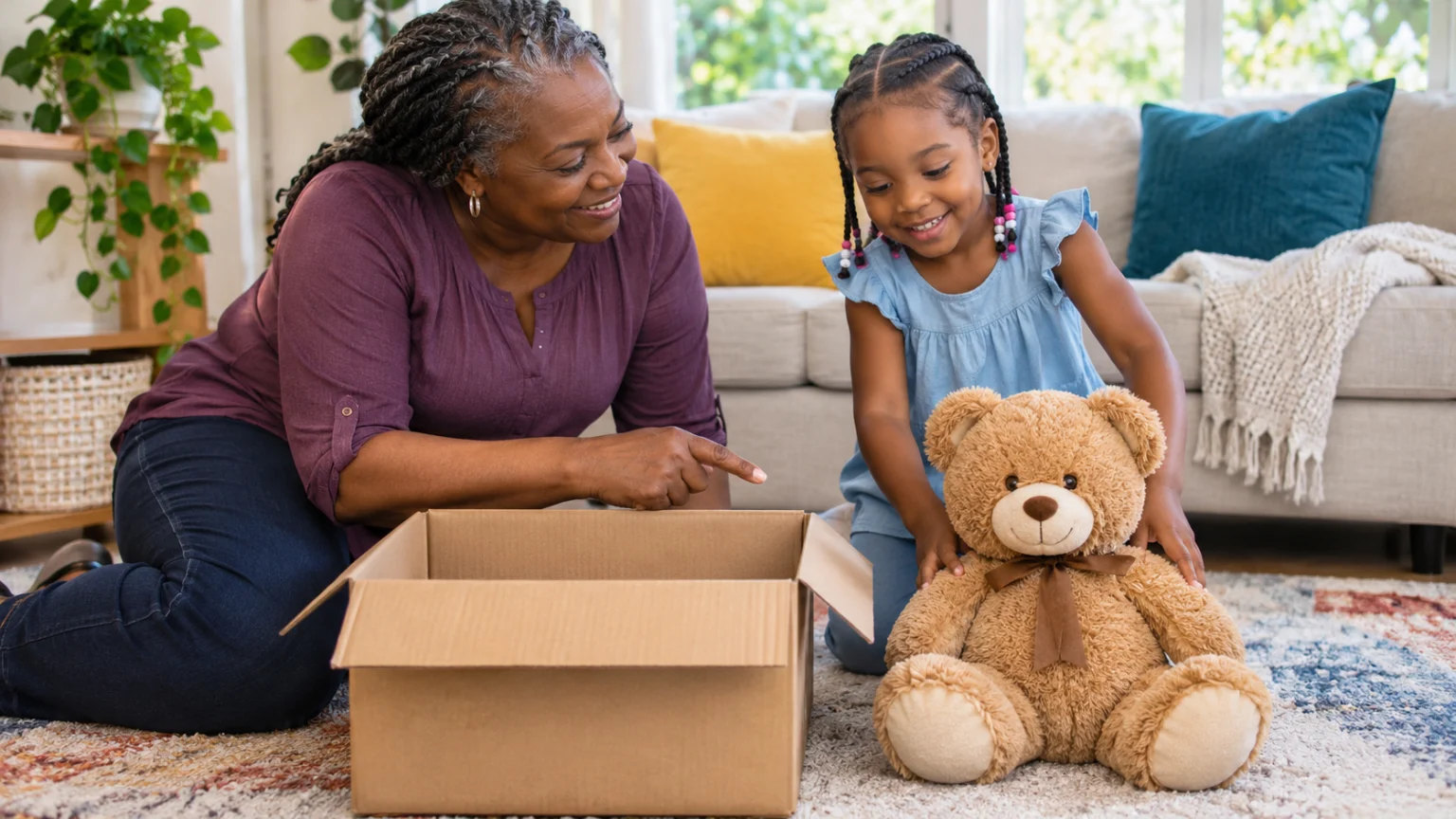
If your preschooler puts a toy beside a box when you ask for “behind,” they may need more visible examples of the relationship. Positional words describe where one thing is compared with another. A toy bear and a cardboard box let your child see and change those relationships directly.
Use a box without staples or sharp edges and a stuffed animal large enough to handle easily. Place both on the floor. Begin with two familiar words, such as in and on, before adding several new positions.
Show each position with a clear reference object
Put the bear in the box and say, “Bear is in the box.” Take it out, place it on top of the closed box, and say, “Bear is on the box.” Keep the box in the same place so the change is easy to follow.
Ask your child to choose where Bear goes next. They can say a word, point, or move the toy. Describe the result using a complete short phrase: “You put Bear beside the box.”
The reference object matters. “Under” by itself leaves the listener wondering under what. Naming both the bear and the box makes the relationship clear and gives your child a useful model for their own directions.
Introduce a small set of playful directions
Once in and on are familiar, add under, beside, or behind one at a time. For under, use a low table or a stable open shelf if the box does not provide a safe space. Keep the bear visible while you demonstrate.
Take turns giving directions. Your child might tell you to place Bear behind the box, then check whether you followed the request. If their instruction is unclear, ask a genuine question: “Behind the box or behind the chair?”
Try a brief bear adventure:
- Bear rests in the box.
- Bear sits beside the box.
- Bear hides behind the box.
- Bear returns to a place your child chooses.
Avoid introducing left and right during the same session unless your child already uses them confidently. Too many new relationships can distract from the words you are practicing.
Check understanding from a different viewpoint
Move yourself to the other side of the box and discuss what you can see. Behind can depend on the object’s orientation or the agreed viewpoint, so make the intended position clear rather than treating every disagreement as an error.
When your child needs help, model the placement and repeat the phrase. Then offer a fresh turn with an easier word. You can also describe a position and have them locate Bear without moving it.
End by using one positional word during cleanup: “Bear goes in the basket.” Learning transfers when the language appears in meaningful routines, not only in a game. For more guided early vocabulary and spatial-thinking activities, visit KidsOnlineLessons and sign up for a preschool learning path.