
KidsOnlineLessons Team · November 9, 2026
How to Teach Inference in Second Grade With Picture Books
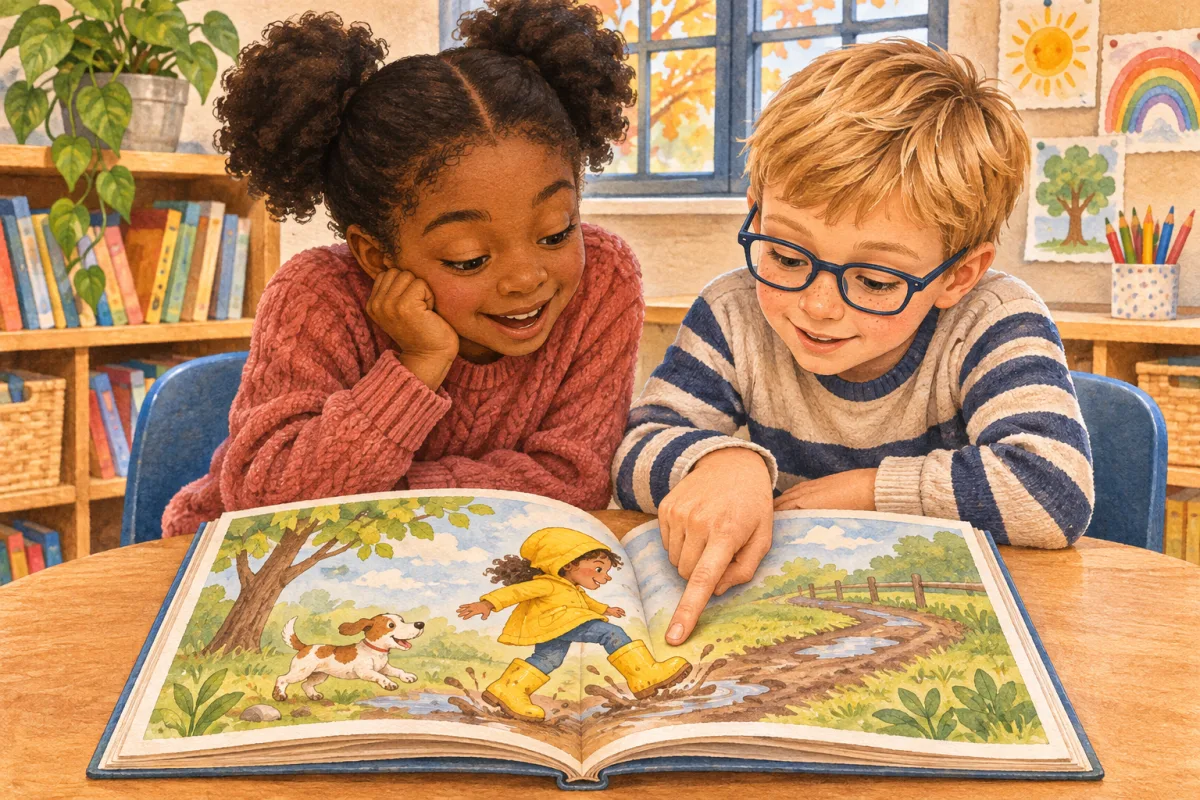
A picture shows muddy footprints across a porch and yellow boots by the door. You ask your child what the weather might have been like, and they say, “Maybe it rained.” When they explain that rain makes dirt muddy, they are making an inference. They used something the illustrator showed and something they already knew. A picture book gives second graders a chance to practice that kind of reasoning without having to decode a new paragraph at the same time.
Help your child separate the picture clue from their idea
Choose a page where a detail suggests something that happened or a feeling that the story leaves unstated. Pause before turning the page. Ask, “What can you point to?” In the porch scene, your child might point to the footprints or the boots. Then ask, “What might that tell us?” Give them time to connect the clue to a possible explanation.
You can model the two steps aloud. “I see muddy footprints. I know dirt gets muddy when it gets wet. I think it might have rained.” Keep the first example brief, then offer a fresh picture for your child to explain. If they repeat your exact answer for a different scene, ask them to point to a detail on the new page first.
Compare two explanations when both might fit
Suppose your child thinks someone watered the garden and walked across the porch. That could also explain muddy footprints. Ask what else you might look for to help decide. A watering can by the path might support their idea. A puddle on the steps and a dripping roof might support yours. If the page leaves room for both possibilities, say so and keep reading.
When a later picture gives you a new clue, go back to the earlier page for a moment. Ask what you thought at first and what you think now. Your child can keep the original idea, change it, or say they are still wondering. Thank them for showing you the detail that helped them decide. That gives them a reason to look closely again next time.
Practice the same skill with a few lines of text
Once your child is comfortable explaining a picture clue, read a short passage aloud and try the same routine. You can pause at one line that hints at how a character feels, such as “Maya held the invitation close and smiled all the way home.”
- Find the clue. Ask which words made them think Maya felt excited.
- Connect it. Ask when someone might smile after getting an invitation.
- Check the idea. Read the next line and see whether it gives you more information.
A clear explanation can be as short as “I think she was excited because she kept smiling.” For guided practice with story clues and reading comprehension, visit KidsOnlineLessons.com and sign up for a second grade learning path.