KidsOnlineLessons Team · November 18, 2026
How to Teach First Graders to Find a Story Problem and Solution
Your first grader may remember a funny scene while missing the problem that drives the story. Looking for a character’s goal and what gets in the way can make the plot easier to understand. The solution is how the central difficulty is resolved, not simply the final event on the last page.
Choose a short story with a clear problem and resolution. Read it for enjoyment first, then return to a few pages for discussion. Keeping the book open lets your child use evidence rather than depend entirely on memory.
Find what the character wants or needs
Ask, “What is the character trying to do?” A character might want to reach a friend, find a missing object, or repair something broken. Then ask what prevents that goal from being reached.
Offer a simple spoken example: “A rabbit wants to visit a friend, but the path across the stream is blocked.” The visit is the goal; the blocked route creates the problem. This distinction helps your child avoid naming any unpleasant detail as the central problem.
If your child gives a vague answer such as “something bad happened,” reread the page where the difficulty becomes clear. Help them put it into one specific sentence using their own words.
Track attempts before identifying the solution
Many stories include more than one attempt. A character may try jumping across a stream, look for another path, and finally build a safe crossing with help. Ask which attempt actually resolves the problem.
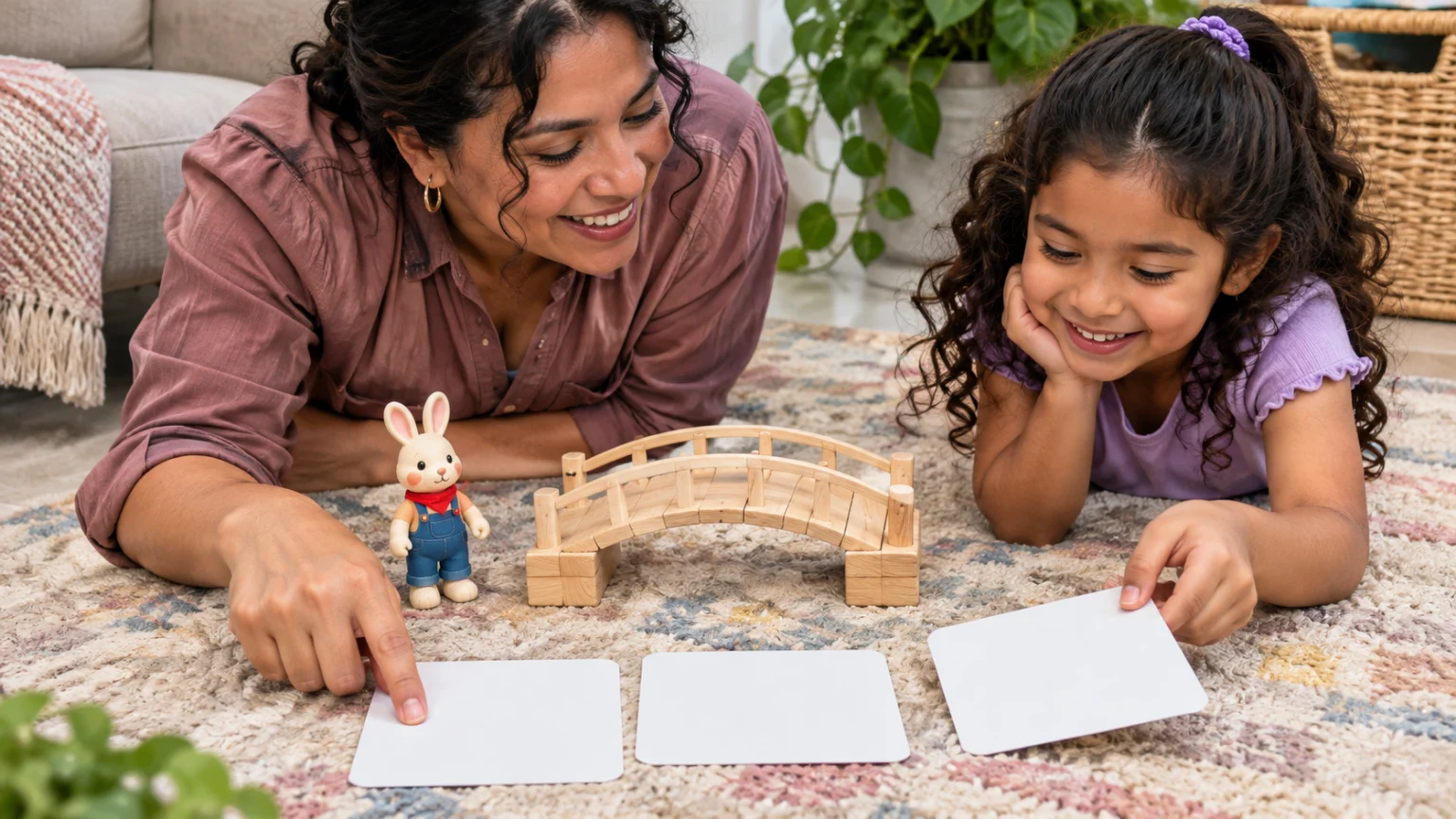
Draw three boxes labeled problem, attempt, and solution. Record a short phrase or sketch in each. If there are several attempts, choose one to discuss rather than filling the page with every event.
Use these questions to keep the reasoning clear:
- “What made the situation difficult?”
- “What did the character try?”
- “Did that action solve the problem?”
- “Which event finally changed the situation?”
If the book ends with a celebration, explain that the celebration may follow the solution. Look back to the action that actually made the goal possible.
Retell the plot with a clear connection
Help your child use a simple sentence frame: “The character wanted ___, but ___. The problem was solved when ___.” This connects the goal, obstacle, and resolution without requiring a long written response.
Encourage a page reference or a precise description as support. Your child can point to a picture, quote a short phrase, or explain an action you reread together. The important habit is returning to the story to check an idea.
Some stories have an open ending or more than one problem. Save those for a later discussion rather than forcing every book into the same simple pattern. Finish by noticing how a character’s persistence or cooperation helped. For more guided reading conversations that strengthen understanding, visit KidsOnlineLessons and sign up for a first grade learning path.