
KidsOnlineLessons Team · November 13, 2026
How to Teach First Grade Silent E With Word Comparisons
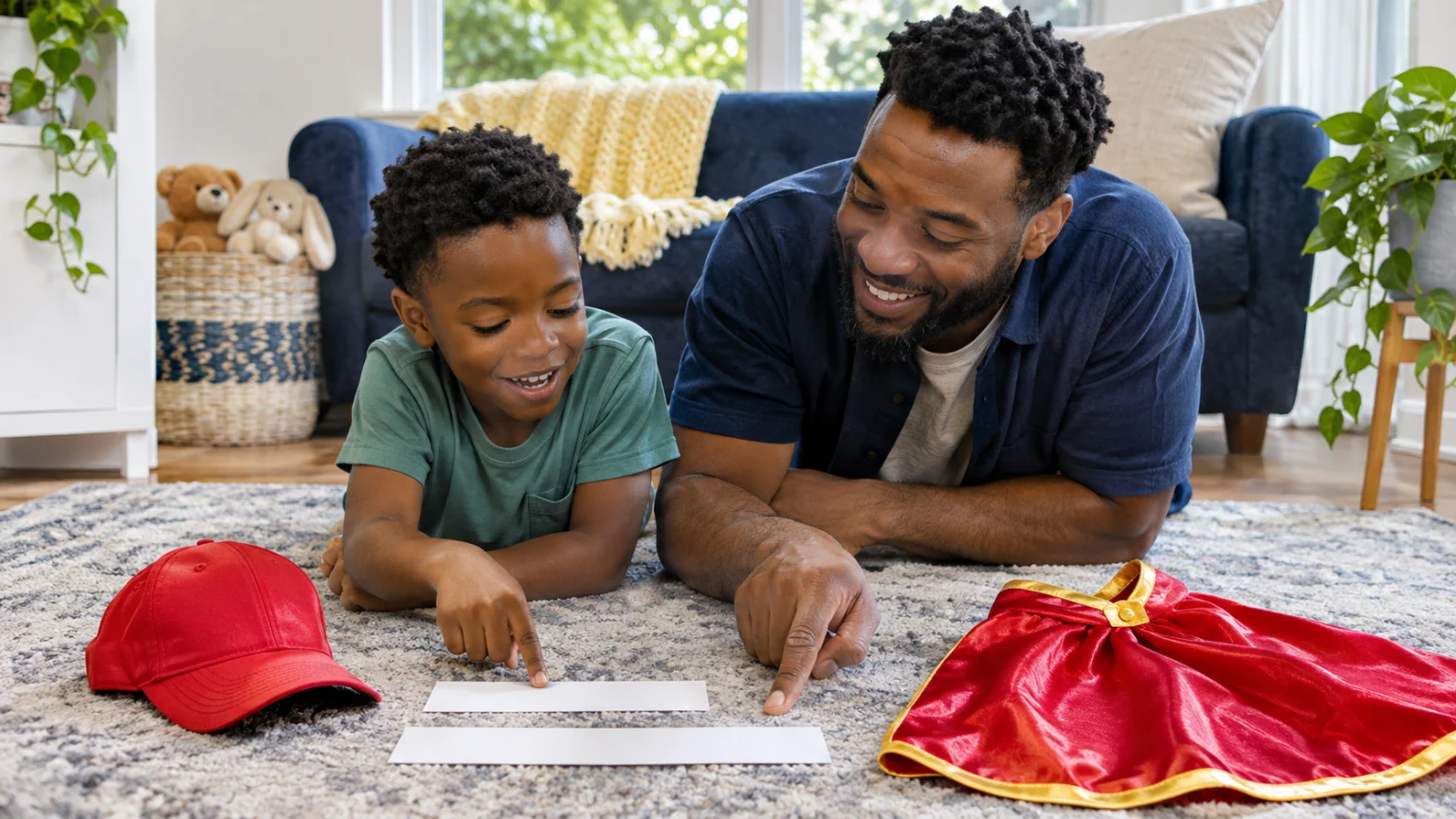
Your first grader can read “cap,” but “cape” still sounds like the same word. Silent-e practice becomes clearer when children can compare a familiar short-vowel word with a word whose final e changes the pattern. Rather than memorizing a slogan alone, they need to see, hear, and read the difference.
Choose a few examples with consonants your child already knows. Explain that this is a common spelling pattern, not a rule that works for every word ending in e. Keep exceptions for later conversations when they arise in reading.
Compare one short-vowel word with its partner
Write “cap” on a strip of paper. Have your child read it by looking through the letters and blending their sounds. Then place an e at the end to make “cape.” Say, “This spelling often represents the vowel’s long sound.” Model /k/ /ā/ /p/ and blend.
Point out that the final e does not add another spoken sound in this example. Cover it and read “cap” again. Uncover it and read “cape.” Moving between the two makes the change visible.
If your child needs support, say both words naturally and discuss their meanings. A cap goes on a head; a cape can drape over shoulders. Meaning helps confirm the reading after attention to the spelling.
Build a small comparison set
Try “kit” and “kite,” then “hop” and “hope.” Work with one pair at a time. Ask your child what changed in the letters and what changed in the spoken vowel. Avoid racing through many examples before the pattern feels clear.
Let your child move a paper e into place. Then give the reading task back to them. Handling a letter is useful when it directs attention to the written word, rather than becoming a separate guessing game.
Use this short routine:
- Read the word without the final e.
- Add e and inspect the new spelling.
- Read the new word and explain its meaning.
- Return to the original word for a quick comparison.
Do not imply that every added e creates a real word. Choose your pairs in advance so the examples are accurate and familiar.
Transfer the pattern into connected reading
Write a short sentence such as “I hope the kite can rise.” Read any unfamiliar spelling together, then invite your child to reread the sentence smoothly. Ask what they hope will happen to keep attention on meaning.
When your child reads a long-vowel word as a short-vowel word, point to the final e and prompt them to try the pattern again. Give a clear model if the prompt is not enough.
Finish with one dictated word from the practiced pairs. Help your child connect the vowel sound with the complete spelling, including the silent e. For more sequenced phonics lessons and parent-guided practice, visit KidsOnlineLessons and sign up for a first grade learning path.