
KidsOnlineLessons Team · November 9, 2026
How to Teach Counting On for First Grade Addition
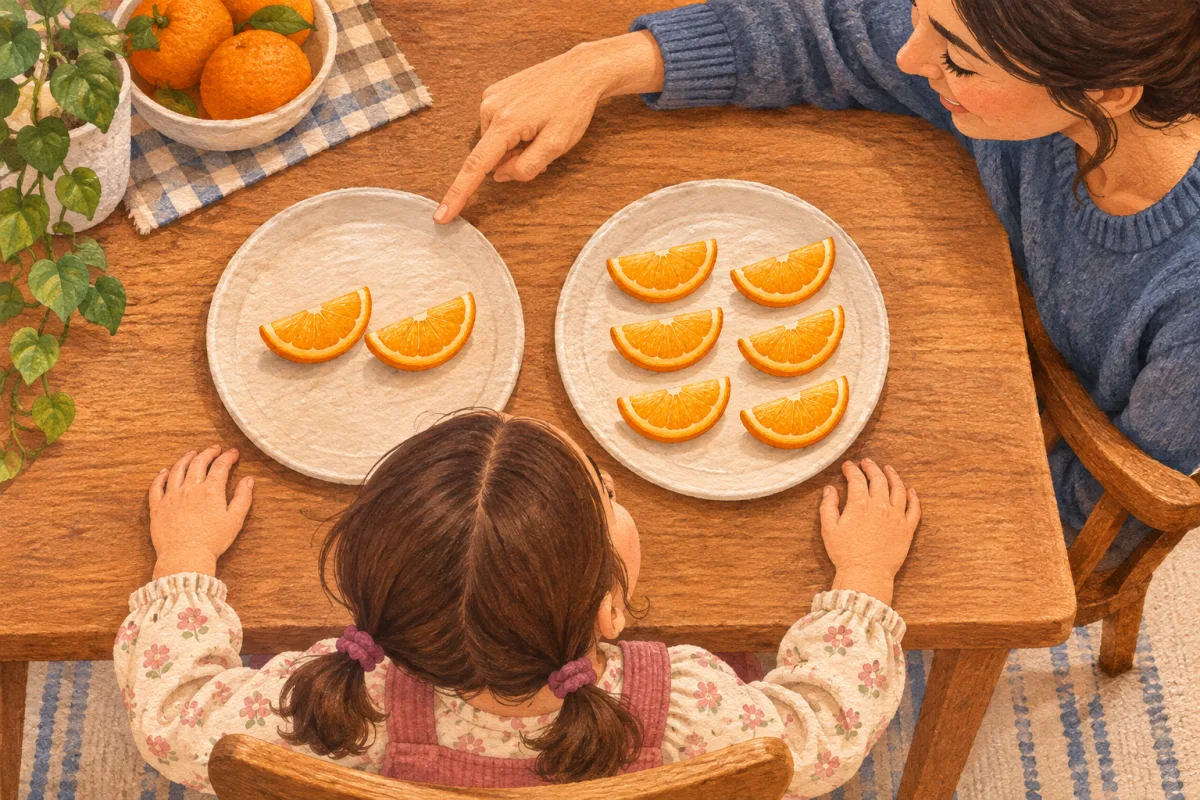
When your first grader adds two groups, do they start at one every time? Counting everything is a sensible way to find the total. Counting on gives them another option once they already know how many are in one group. They can hold that number in mind and count only the extras. Two small plates and a snack make the difference easy to see.
Show why the starting number stays in the total
Put two orange slices on one plate and six on the other. Ask your child to count the larger group and tell you how many are there. Then ask, “If we add these two slices, what will come after six?” Have your child move one slice to the larger plate and say “seven,” then move the other and say “eight.” Ask how many slices there are altogether.
If your child starts by saying “six” as they move the first slice, pause and point to the six slices that were already there. Say, “We already have six. Let’s move one more. What comes next?” A useful distinction is that six tells how many you started with. Seven tells how many you have after adding the first extra slice.
Practice starting with the larger number
Write (2 + 6) on paper. Point to the plate with two slices, then the plate with six. Ask whether the total would be different if you counted from two and added six. Try both ways and compare how many counting steps each takes. You can start from either group and get eight. Starting at six takes two steps, so it’s an efficient choice.
Keep both plates visible for a few rounds. Then try starting with the larger group covered by a napkin after your child has counted it. Leave the extras in view so they can touch each one as they say the next number. If they want to uncover the first group to check, let them. Checking gives them a way to see that their starting number is still part of the total.
Try counting on during everyday routines
- At snack time, show seven crackers in one bowl and add two more one at a time. Ask your child to say each new total.
- When tidying up, start with five blocks already in a bin. Drop in three more and count on as each one lands.
- On paper, show (3 + 8). Ask your child to circle the starting number and draw one dot for each extra count.
Once your child can explain why they started at eight in the last example, let them set up a problem for you. They might tell you which number to hold in mind and check the result by counting the objects. For more practice connecting objects and equations, visit KidsOnlineLessons.com and sign up for a guided first grade learning path.