KidsOnlineLessons Team · November 9, 2026
How to Retell a Second Grade Story Using Three Key Events
After hearing a story, a second grader may remember the funny hat in one picture and forget why the main character left home. The hat stood out. A retell asks the reader to decide which details help a listener understand what happened. Using three key events gives your child enough room to tell the story clearly while making a few thoughtful choices. Try it first with a short book you have read together.
Choose events that help a listener follow the story
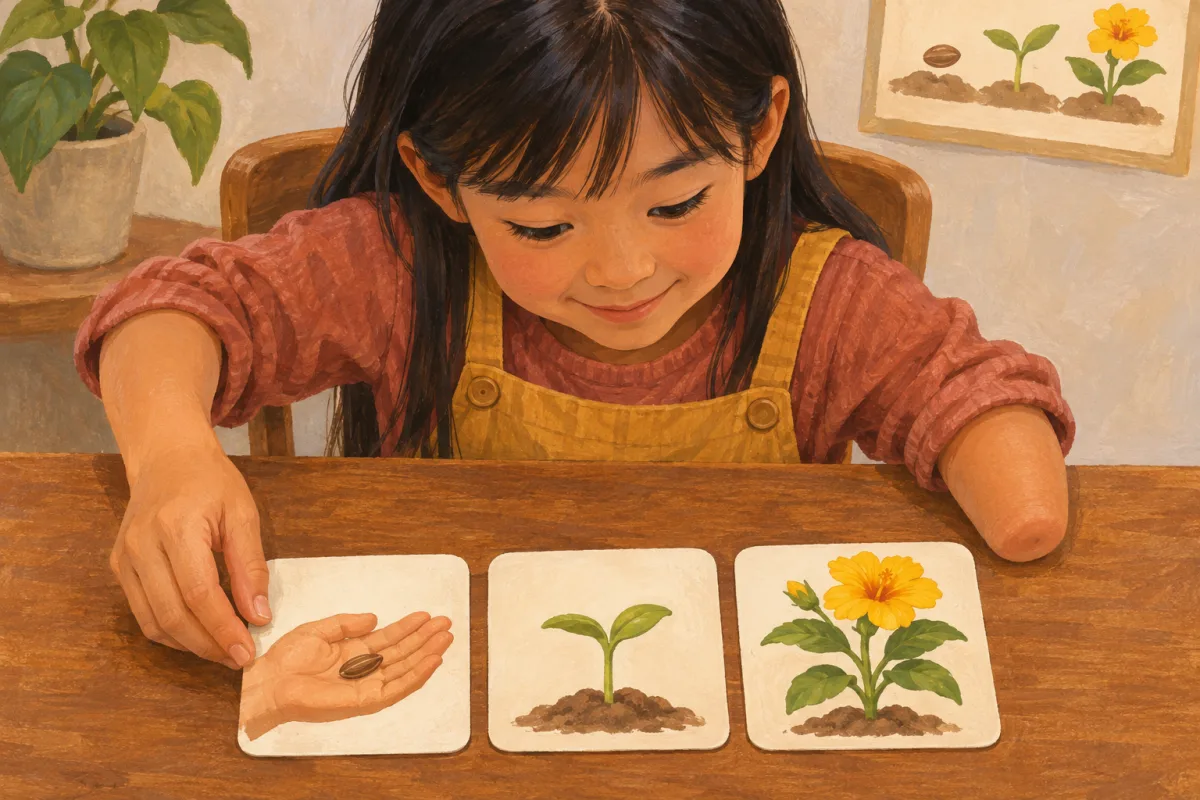
Read a story in which a character wants something and encounters a problem. You could also tell a quick story about Lina planting a seed, seeing it droop when she forgets to water it, and helping the plant recover by caring for it regularly. Set out three blank cards. Ask your child to choose something from the beginning, middle, and end that a listener needs to know.
For the plant story, they might draw Lina putting the seed in soil, the drooping plant, and Lina watering it until it recovers. Have them point to each card and tell what happened. If they draw a sprout for the middle, ask which event explains why Lina changed her routine. Give them room to add a second detail to the picture or change the card.
Connect the events so the retell makes sense
Have your child start by naming the character and their goal. “Lina wanted to grow a flower” gives a listener a reason to care about the seed. Then ask what changed in the middle. If your child says, “Then it drooped,” ask them to say why. The explanation helps connect the middle event to what Lina did at the end.
If your child gives a list of events and stops, read the list back as a listener. Ask one question you still have. “How did Lina get the plant to perk up?” invites a specific repair. Let your child add that part in their own words. If they leave out a favorite detail that does help explain a choice, invite them to put it back.
Practice retelling to someone who needs the story
- Mix up the cards. Ask your child to restore the order and explain how they know which event came first.
- Try a new listener. Have your child retell the story to someone who did not hear it, or to a toy if they prefer.
- Use fewer prompts. Put the cards face down after one practice and let your child turn over a card only if they need it.
The three cards are a planning support, not a rule that every story contains exactly three important events. If the chosen book needs another connection to make sense, add it briefly. A clear retelling should serve the listener’s understanding rather than fit a rigid formula.
When your child can describe what changed and how the story ended, ask which event they would keep if they had only a minute to tell it. For more ways to practice choosing and connecting story details, sign up for a guided second grade learning path with KidsOnlineLessons.