
KidsOnlineLessons Team · November 10, 2026
How to Practice Toddler Turn-Taking With a Rolling Ball
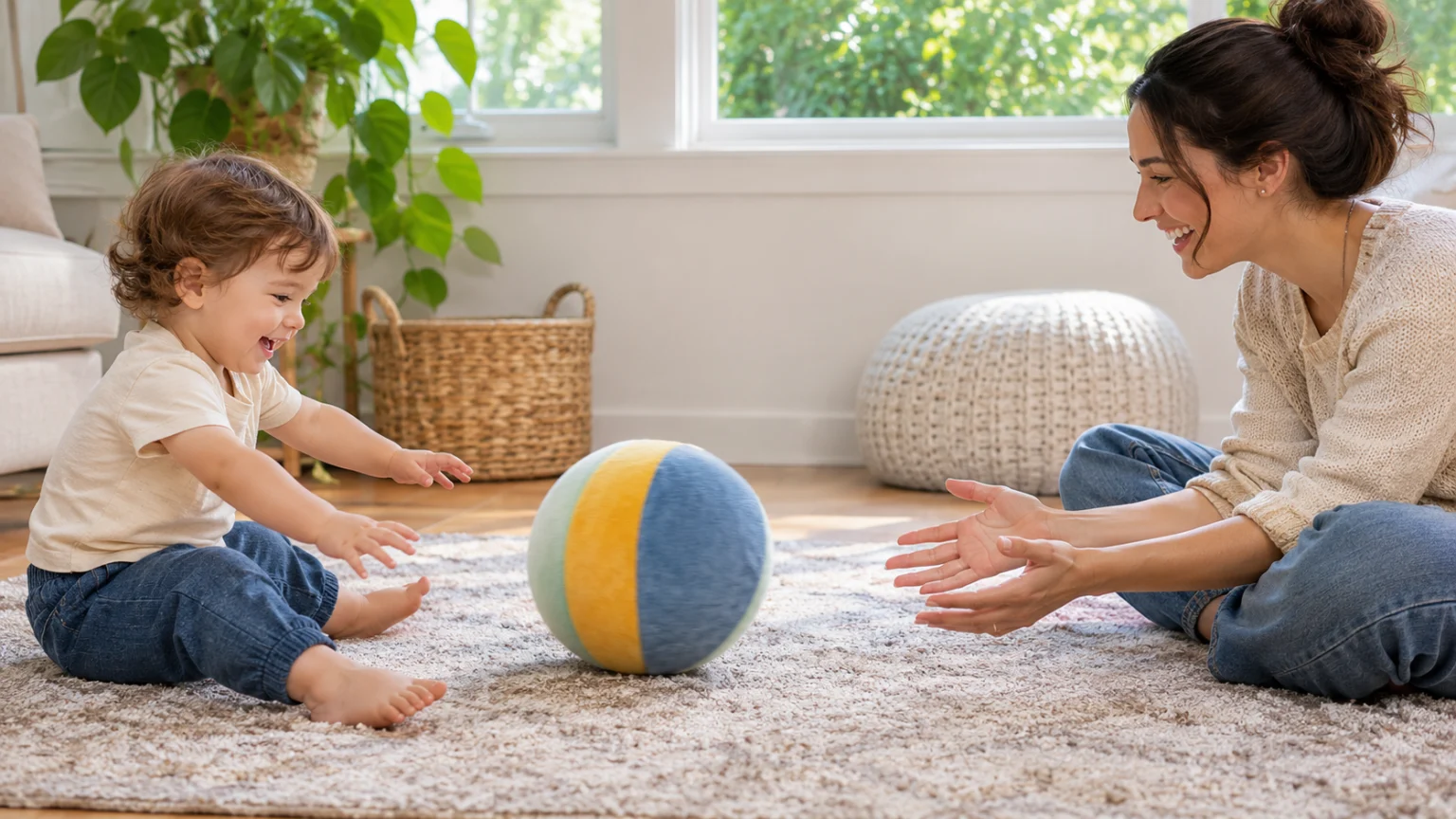
A ball that rolls away can turn a shared game into a chase. If you want to practice toddler turn-taking, start by making the exchange easier to see and easier to repeat. Sit close together with a large, soft ball between you. Your goal is a few enjoyable back-and-forth moments, rather than a long wait or a perfectly followed rule.
Turn-taking can begin with reaching, looking, or pushing. Your toddler does not need to say “your turn” before joining in. Watch for the small ways they show they are ready to connect.
Set up a rolling ball exchange
Choose a clear patch of floor away from stairs and furniture corners. Sit with your legs open in a comfortable V so they help catch the ball. Invite your toddler to sit facing you, close enough that one gentle push reaches them.
Roll the ball slowly and say, “Ball to you.” When it arrives, wait. Your child may pat it, hold it, or roll it sideways. Describe what happens without rushing to retrieve it: “You stopped the ball.” Then hold out your hands and ask, “Ball to me?”
If your toddler wants to stand, you can stay seated and receive their push. The shared movement matters more than matching positions.
Make waiting short and visible
When the ball returns, pause for a moment before rolling it again. Say, “My turn,” and keep the action brief. Then say, “Your turn,” as you release it. Repeated words paired with repeated movements make the pattern easier to notice.
Avoid holding the ball until your child uses a particular phrase. A gesture or glance is enough to keep the exchange moving. If they reach for it during your turn, acknowledge the wish: “You want it. Here it comes.” You can model a tiny wait without turning the game into a struggle.
Try these small adjustments:
- Move closer if the ball regularly misses your child.
- Use a slower, softer ball if the movement feels startling.
- Let a stuffed animal receive one roll if your toddler enjoys pretend play.
- Stop while your child is still comfortable, even after only two exchanges.
Notice connection rather than counting turns
Look for a change in how your child participates. Do they watch your hands before the ball moves? Do they push it toward you after catching it? Those actions give you useful information about the shared pattern.
If your toddler keeps the ball, offer a simple ending: “You are holding it. We can roll again later.” You can return to the game another day. Learning to share space and materials grows through many ordinary experiences, supported by patient adults.
Carry the same language into passing a washcloth or handing over a large toy. Keep requests small and offer your own turn generously. To explore more short, parent-guided activities, visit KidsOnlineLessons and sign up for a toddler learning path that fits your family.