
KidsOnlineLessons Team · November 18, 2026
How to Help Second Graders Read Words With Common Suffixes
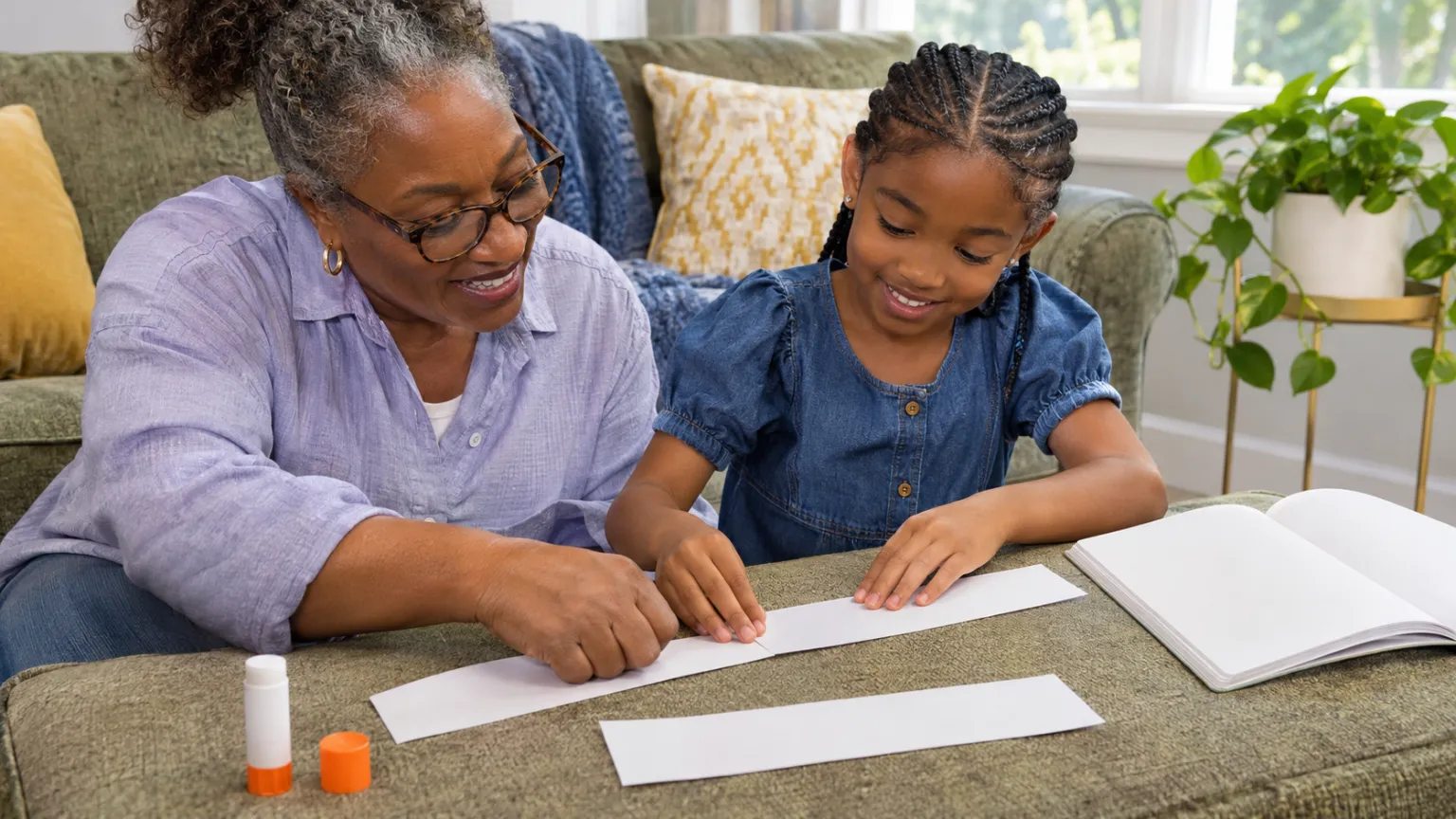
Your second grader may read “jump” easily but pause at “jumping,” even though most of the word is familiar. A suffix is a meaningful ending added to a base word. Noticing that structure can help children read a longer word and understand how its meaning or use changes.
Start with familiar bases and common endings such as -ing, -ed, and -s. Choose examples that match your child’s reading instruction. Work with one ending first if several patterns would make the activity feel crowded.
Find the base and read the complete word
Write “jump” and read it together. Add ing to make “jumping.” Underline the base and circle the ending. Ask your child to read the familiar part, then combine it with the suffix and say the complete word naturally.
Use a sentence such as “The frog is jumping.” Discuss how the word describes an action in progress here. A brief action or gesture can make the meaning clearer than a technical grammar explanation.
Next compare “help” and “helping.” Give your child a chance to identify the parts independently. Return to the whole word after discussing its structure, so the reading does not remain a disconnected sequence of chunks.
Notice that endings can affect spelling and sound
Not every base stays visually unchanged. Compare “make” and “making,” pointing out that the final e is dropped before ing in this example. Then compare “run” and “running,” where the final consonant is doubled. Introduce one change at a time rather than presenting a large rule list.
The ending -ed also has different pronunciations. In “jumped,” it sounds like /t/; in “played,” like /d/; in “wanted,” it adds a syllable. Model the complete words and let your child hear the differences.
Try a short routine:
- Read the base word if it is visible or recoverable.
- Identify the suffix and any spelling change.
- Read the complete word in a natural voice.
- Check how it works in a sentence.
Avoid insisting that every word can be read by separating any familiar-looking ending. A meaningful base and a sensible whole-word meaning are useful checks.
Use the longer word in connected reading
Write two short sentences containing practiced words. Ask your child to read them accurately, then reread with comfortable phrasing. Discuss who is doing the action and when it happens.
If your child misreads the ending, point to that part and compare the word with its base. Supply a clear model if needed. Changing an ending can change a sentence’s meaning, so it deserves attention rather than being skipped.
Finish by asking your child to choose one practiced word for a new spoken sentence. Keep a small list of examples that need another look, and revisit them without pressure. For more guided word-reading and vocabulary practice, visit KidsOnlineLessons and sign up for a second grade learning path.