KidsOnlineLessons Team · November 13, 2026
How to Help Second Graders Compare Two Versions of a Story
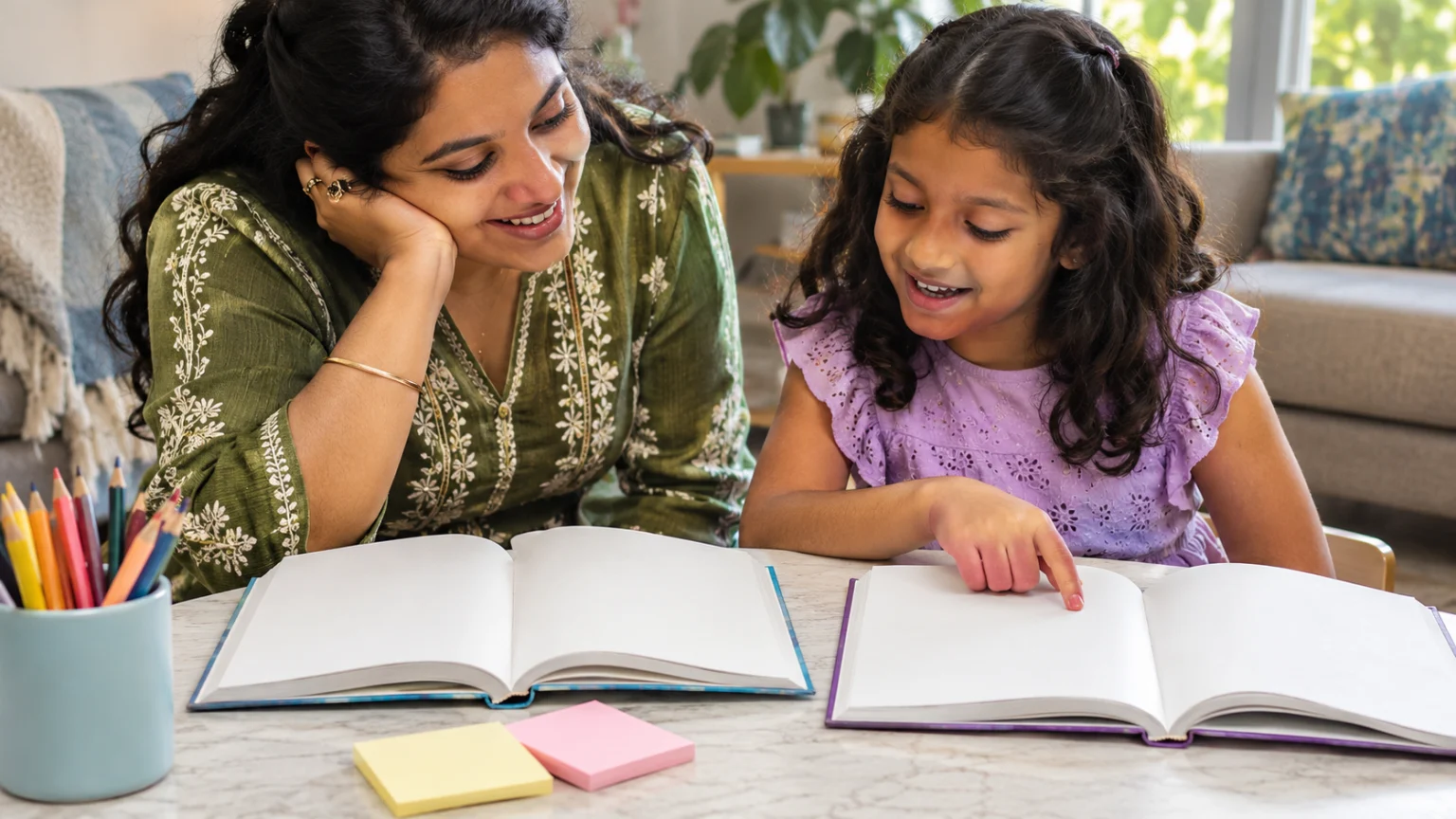
Two versions of a familiar story can feel almost identical to a child at first. Both might include a clever animal or a lost object, yet the characters’ choices and the ending may differ. Comparing versions helps second graders look beyond the broad plot and explain what each telling contributes.
Choose two short retellings of the same traditional tale, or two clearly related adaptations. Read them on separate occasions if needed. Your child should understand each story before being asked to compare them.
Recall each version before making comparisons
After the first reading, ask your child to name the main character, the central problem, and the ending. Record a few words or a simple drawing for each. Use the same three prompts after reading the second version.
Keep both books nearby so your child can check a detail rather than relying entirely on memory. You can reread a relevant page aloud when decoding would interrupt the discussion.
Explain that comparing includes noticing similarities and differences. Neither version needs to be declared better. The task is to understand how the tellings are alike and how they make different choices.
Organize details in a small side-by-side chart
Draw two columns, one for each title, and three rows labeled characters, problem, and ending. Help your child add one precise detail to each space. “An animal” may be too broad; “a patient tortoise” gives you something more useful to discuss.
Ask which details match across the chart. Then look for a difference that changes how the story unfolds. Perhaps one character asks for help while another works alone. Return to the text or pictures to verify the observation.
Try these comparison prompts:
- “What problem appears in both versions?”
- “Who makes a different choice?”
- “Which page shows that difference?”
- “Does the ending teach the same lesson?”
If your child offers a personal preference, welcome it and ask for a specific reason. “I like this one” becomes a stronger response when connected to a character, event, or illustration.
Explain why one difference matters
Choose a single difference from the chart. Ask, “What would change if that part were missing?” This moves the conversation from listing details toward considering their effect. A new helper, for example, might make the solution depend on cooperation.
Do not insist that every change has a hidden meaning. Some differences are small, while others affect the tone, outcome, or lesson. Let your child test an idea against what actually happens in each version.
Finish with two spoken sentences: “Both stories…” and “In this version, however…” You can write your child’s words while they supply the reasoning. Clear thinking matters more than a long response.
Comparing stories invites curiosity about different voices and ways of telling. For more guided reading conversations and evidence-based comprehension practice, visit KidsOnlineLessons and sign up for a second grade learning path.