KidsOnlineLessons Team · November 11, 2026
How to Help Preschoolers Recognize Their Own Name
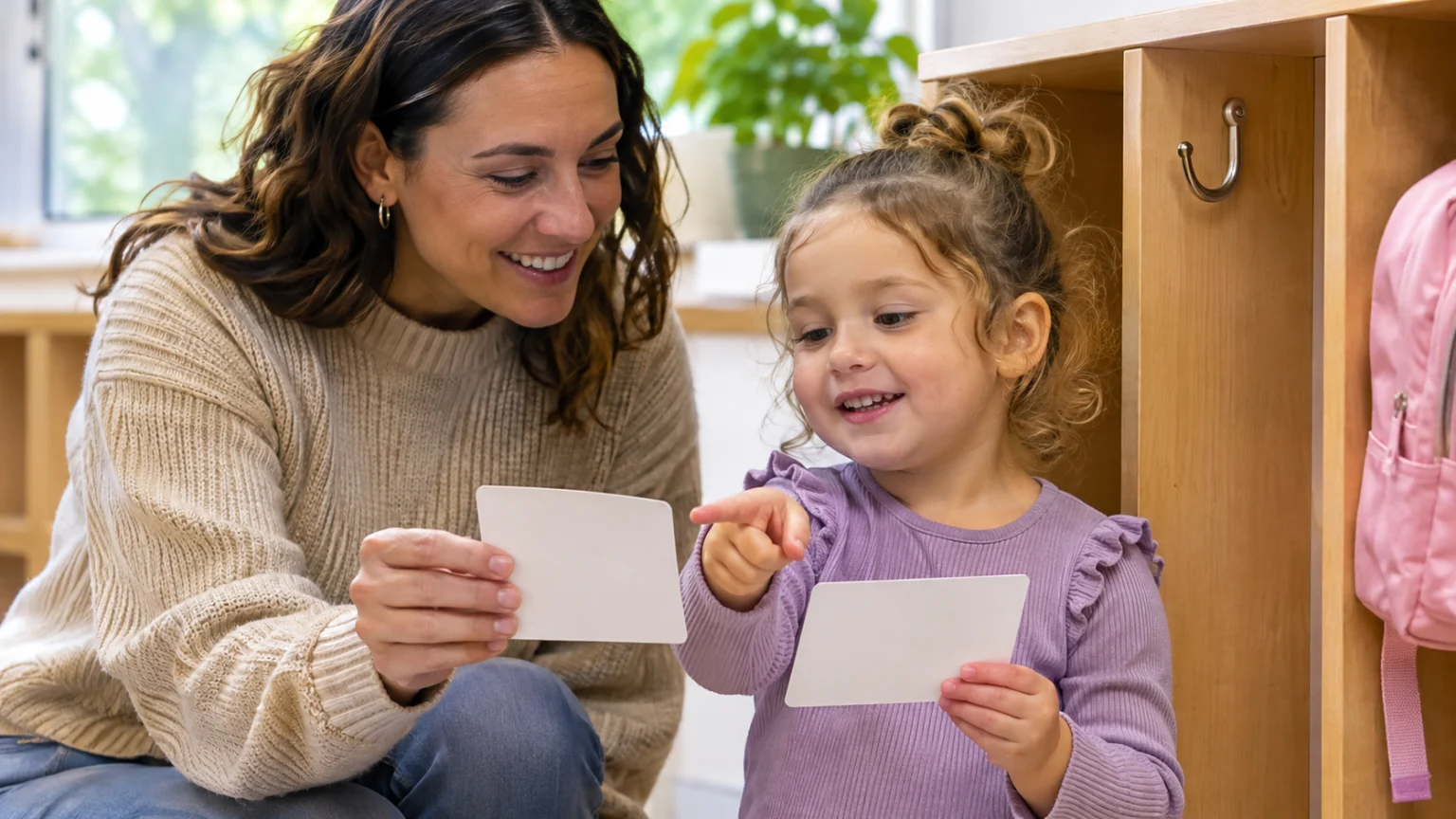
A preschooler may recognize their name on a familiar coat hook but miss it on a different card. They could be using the hook’s location, the card’s color, or the overall shape of the print. Those clues are a starting point. You can help them look more closely at the letters while keeping their name connected to something meaningful.
Use the name your child usually sees at preschool or in family routines. Write it clearly with an uppercase first letter and lowercase letters after it. There is no need to begin with handwriting practice.
Connect the printed name with a real purpose
Make one simple name card and place it beside your child’s artwork. Say, “This says Maya. It tells us this picture belongs to you.” Move your finger from left to right beneath the name as you read it.
Invite your child to help place the card on their shelf, drawing folder, or place at the table. Read it naturally whenever it serves that purpose. Meaningful repetition gives the print a reason to matter beyond getting an answer right.
If your child’s name uses a different writing system, follow its normal conventions. Your family language and script belong in early literacy experiences too.
Compare names without turning it into a race
Write your child’s name and one familiar family member’s name on matching plain cards. Ask, “Which one is yours? What helped you decide?” If they point to the first letter, name it and look for another letter together.
Start with clearly different names before introducing similar ones. “Maya” and “Ben” are easier to distinguish than “Maya” and “Mia.” When the task becomes comfortable, place the same name on a new sheet to see whether your child recognizes the print in a different setting.
Try a few playful searches:
- Find the first letter of the name on a book cover.
- Match two cards showing the same name.
- Notice a letter that appears more than once.
- Compare the name with an adult’s longer or shorter name.
Talk about what your child notices. Avoid relying only on the first letter, especially when classmates or siblings share it.
Invite letter building before expecting neat writing
Offer large paper letter pieces or draw a broad letter for finger tracing. Keep materials large and appropriate for your child’s handling skills. Let them arrange the letters while you provide a name card to check against.
If the letters get reversed or mixed up, compare one part at a time: “Our card begins with M. Where could that piece go?” You can model the change without correcting every attempt at once.
End by using the name for a genuine purpose, such as signing a picture with your support. Recognizing a name can grow alongside storytelling, sound play, and enjoyable shared reading. For more meaningful early literacy activities, visit KidsOnlineLessons and sign up for a guided preschool learning path.