KidsOnlineLessons Team · November 18, 2026
How to Explore Fast and Slow With Toddler Movement Games
“Slow down” can be hard for a toddler to interpret in the middle of an exciting moment. Exploring fast and slow during calm play gives those words a visible meaning. You can use a toy, a hand movement, or gentle walking to show the difference before asking your child to change their own pace.
Choose a clear indoor space away from stairs, slippery surfaces, and sharp furniture corners. Keep the game at a comfortable level of movement. You can do the entire activity seated if that suits your child better.
Show the contrast with a familiar toy
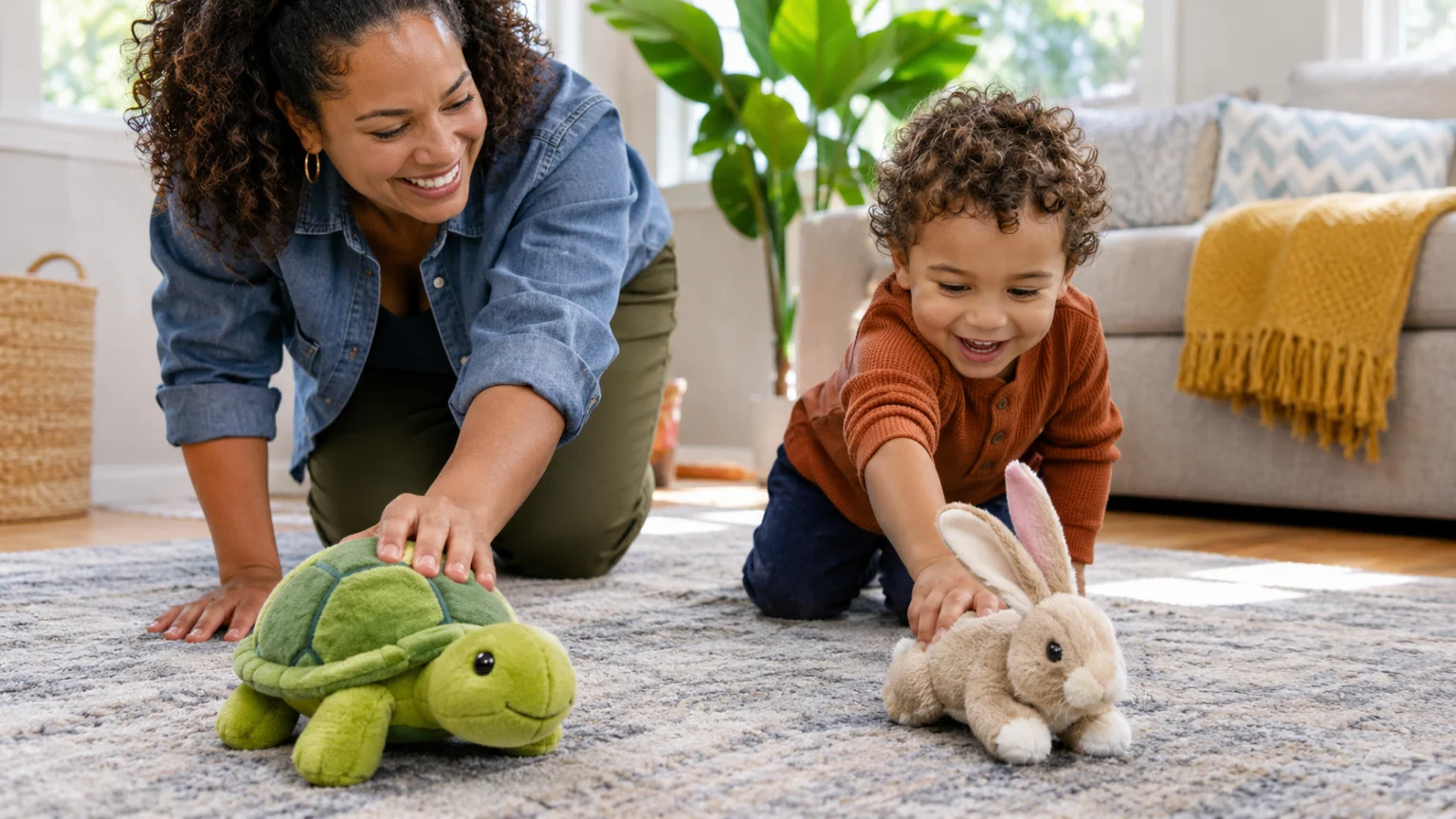
Move a large toy animal slowly across the rug and say, “Slow turtle.” Then move it more quickly along the same short route and say, “Fast turtle.” Keep the distance similar so the change in speed is easier to notice.
Offer the toy to your child. They might copy you, choose one pace repeatedly, or invent another action. Describe what you see: “Your turtle is moving slowly,” or “That was a quick trip.”
Avoid making one pace the correct answer throughout the game. Both words describe useful differences. You are building understanding, rather than teaching that fast always means fun or slow always means good.
Invite comfortable movement with clear starts
Try moving your hands slowly and quickly while seated. Wave slowly, pause, then wave faster. Give your child time to watch before inviting them to join. A familiar song can provide a rhythm, but you can also use your voice alone.
If your child enjoys walking, take a few slow steps together across the clear space. Then try a slightly quicker walk while remaining controlled. Running is unnecessary, especially when space is limited.
Choose one small variation:
- Tap your knees slowly, then more quickly.
- Move a soft toy along the same short path at two speeds.
- Roll a large ball gently and compare slower and quicker rolls.
- Let your toddler direct your hand movements with a word or gesture.
Pause between changes. Rapidly switching instructions can turn the activity into a stopping challenge rather than a clear comparison of speeds.
Connect speed words with everyday care
Later, describe a slow action during a routine: “I am pouring slowly so the water stays in the cup.” Keep your toddler safely away from hot liquids and demonstrate with ordinary, manageable materials.
When you need a slower pace in real life, pair the word with a concrete action: “Slow feet beside me,” while you model the steps. The earlier game provides a familiar example, but your child may still need close support in busy settings.
Notice whether your toddler changes a toy’s pace after hearing the word, even if changing their own movement remains harder. End with a comfortable, quiet action together. For more guided learning through movement and everyday language, visit KidsOnlineLessons and sign up for a toddler learning path.