
KidsOnlineLessons Team · November 9, 2026
How to Build First Grade Reading Fluency With Echo Reading
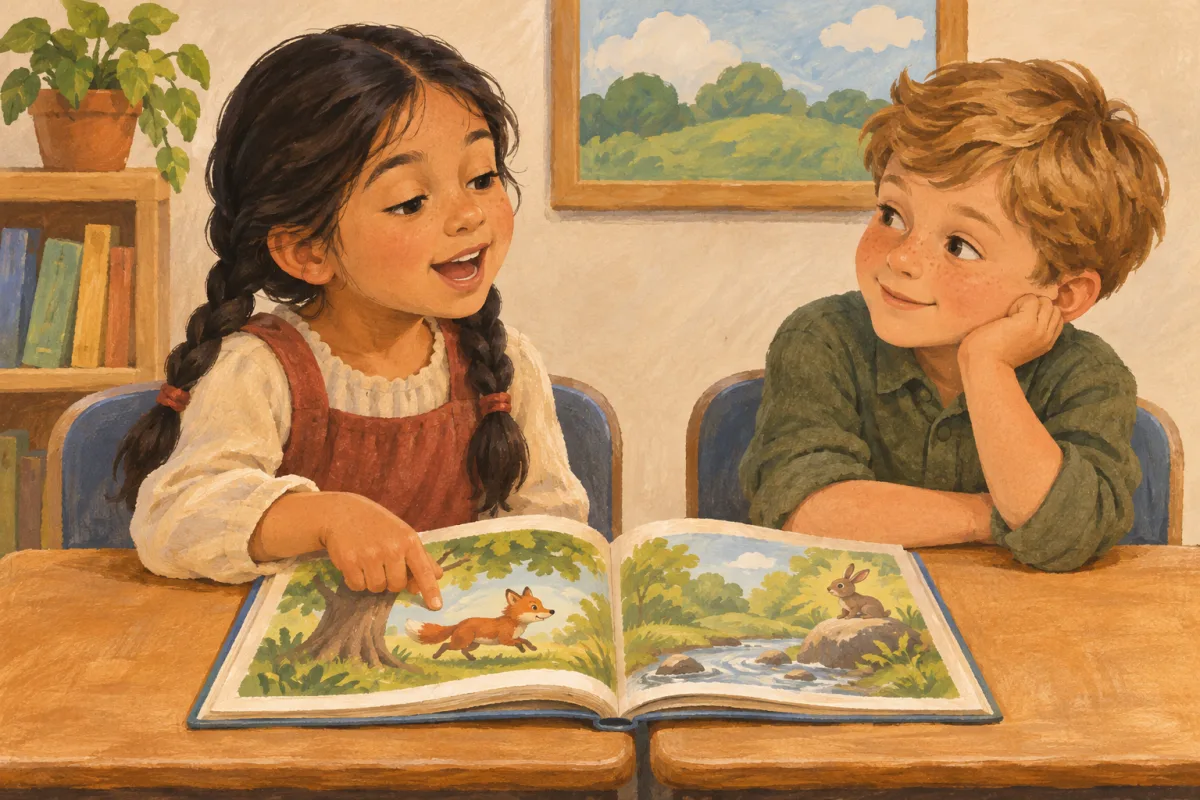
Your first grader can read each word in a sentence, but the sentence still sounds like a list. Echo reading gives them a chance to hear how the words fit together, then try that same line while the sound of it is fresh. Choose a short passage your child can mostly read already. With familiar words, they have more attention to spare for pauses, phrasing, and expression.
Model one short phrase and invite an echo
Sit where both of you can see the page. Choose a line such as “We ran to the gate.” Point just beneath the words as you read the line at a comfortable pace. Let the words sound connected. Then ask your child to read the same line while looking at the print. If they skip a word, point to the place and give them a moment to check it.
For a longer line, find a natural place to split it. In “After lunch, we ran to the gate,” you can read “After lunch” as one piece and the rest as a second piece. Echo each piece, then read the whole line together. Notice how the brief pause after the comma lets the listener hear when the running happened.
Help your first grader use the meaning of the sentence
Try a line of dialogue. Read “Where did it go?” in the voice you might use if you were looking for something. Ask your child to try it as the character. If they read it in a flat voice, look at the picture or reread the previous line together. Ask what the character is trying to find. Once they understand the situation, give them a chance to try the question again.
Some children enjoy a dramatic voice and lose their place on the page. Bring their attention back to one short phrase. Some focus so hard on the words that a second reading sounds exactly like the first. Try reading together first, then listen while they read it independently.
Keep the practice short and listen for changes
- Choose a manageable amount. Two to four lines can be enough for one round.
- Describe one thing you heard. Say, “You paused after ‘After lunch,’ and I could hear the two parts of the sentence.”
- Try a fresh line. After a few echoes, offer one new line at a similar reading level. Ask your child to read it and tell you where a listener might need a pause.
On another day, try a fresh short passage with familiar spellings. This helps you notice whether accurate phrasing transfers beyond a memorized line. If decoding remains difficult, support those words first so attention to expression does not replace careful reading of the print.
When the practice is over, return to the story and find out what happens next. This gives your child a reason to keep reading beyond the lines they practiced. For more short activities that connect decoding with fluent reading, sign up for a guided first grade learning path with KidsOnlineLessons.