
KidsOnlineLessons Team · November 9, 2026
How to Blend Three Sounds Into a Word in Kindergarten
You say /m/, /a/, /p/, and your kindergartner repeats all three sounds. Then you ask for the word and hear silence. Your child has heard the parts. The next step is holding them close enough together to recognize map. Blending is putting sounds together to hear a word. A short listening game with familiar words lets your child practice the join before they have to think about how the word looks in print.
Say the sounds close enough to join them
Sit side by side and start with map. Draw out the first sound, move straight into the short vowel, and finish with a quick /p/. Then say the whole word at your normal pace. Try it again, moving your finger slowly across the table as your voice moves through the word. Have your child follow the movement with their own finger.
For the next round, say the sounds in sun and ask, “What word did you hear?” Wait a moment. If your child repeats the individual sounds, give them credit for hearing them and say the first two sounds closer together. A little less space between them can make the familiar word easier to recognize.
Show the difference between separate sounds and a whole word
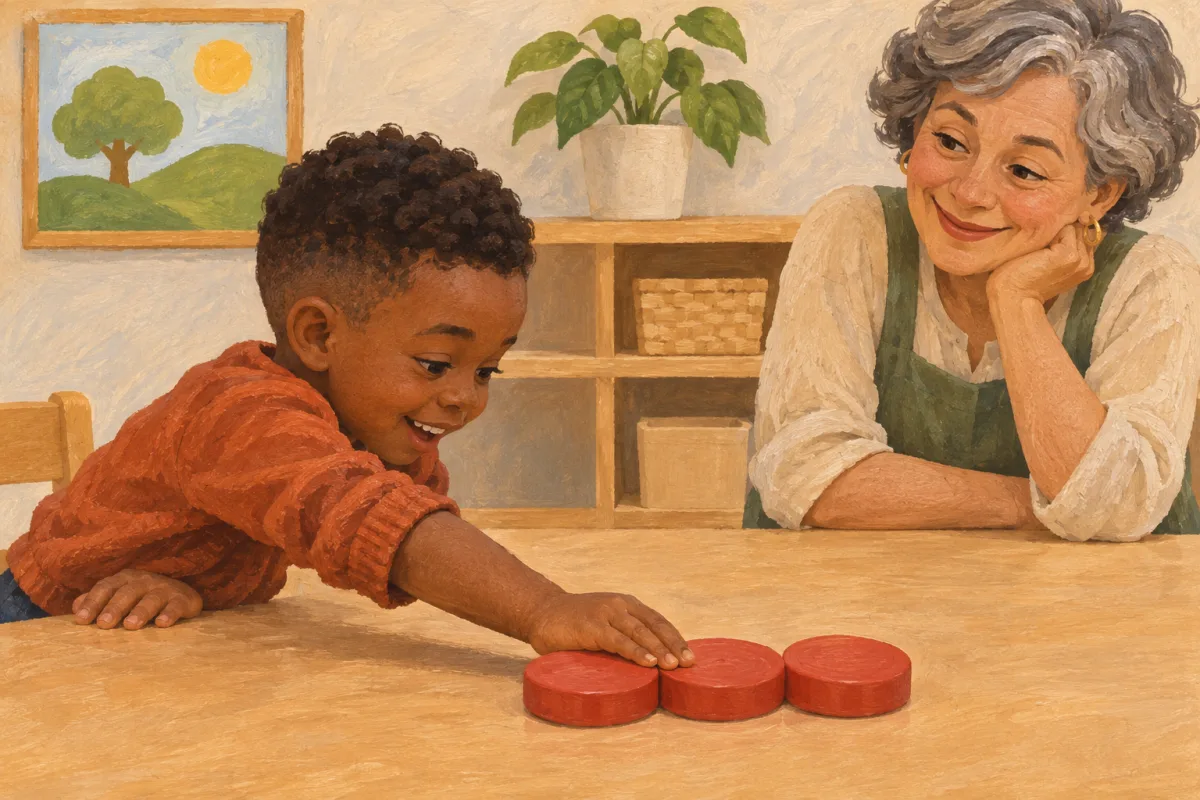
Line up three large counters with a gap between each one. Point to one counter per sound as you say fan slowly. Then slide the counters toward one another while saying the sounds with less space between them. When the counters are together, say “fan.” Repeat with man, and give your child the job of moving the counters.
If they hear a different word, try putting the two words side by side. Suppose your child says man when you said fan. Say both words and draw out their first sounds. Ask them what changed, then give them a new turn. If the counters slow down the game, use the finger sweep on its own.
Give your child a few ways to practice blending
- Start with sounds you can stretch. Try fan, sun, or map. Save words that begin with a quick stop sound, such as tap, until your child can join the easier examples.
- Offer a word choice when needed. Show a picture of a map and a picture of the sun. Say the sounds for one and let your child point.
- Let them lead. Ask your child to choose a familiar word and try saying its sounds for you to join.
After a successful blend, place the word in a short spoken sentence and discuss its meaning. If you offer a written sentence, use spellings your child has already learned or read unfamiliar parts together. This connects sound work with understanding rather than treating blending as an isolated performance.
After a successful round, offer one new word to see whether your child can blend without the counters. End while the game still feels manageable. For guided practice putting sounds together and connecting them to print, sign up for a kindergarten learning path with KidsOnlineLessons.