KidsOnlineLessons Team · November 9, 2026
Beginning Sound Games for Preschoolers Using Household Objects
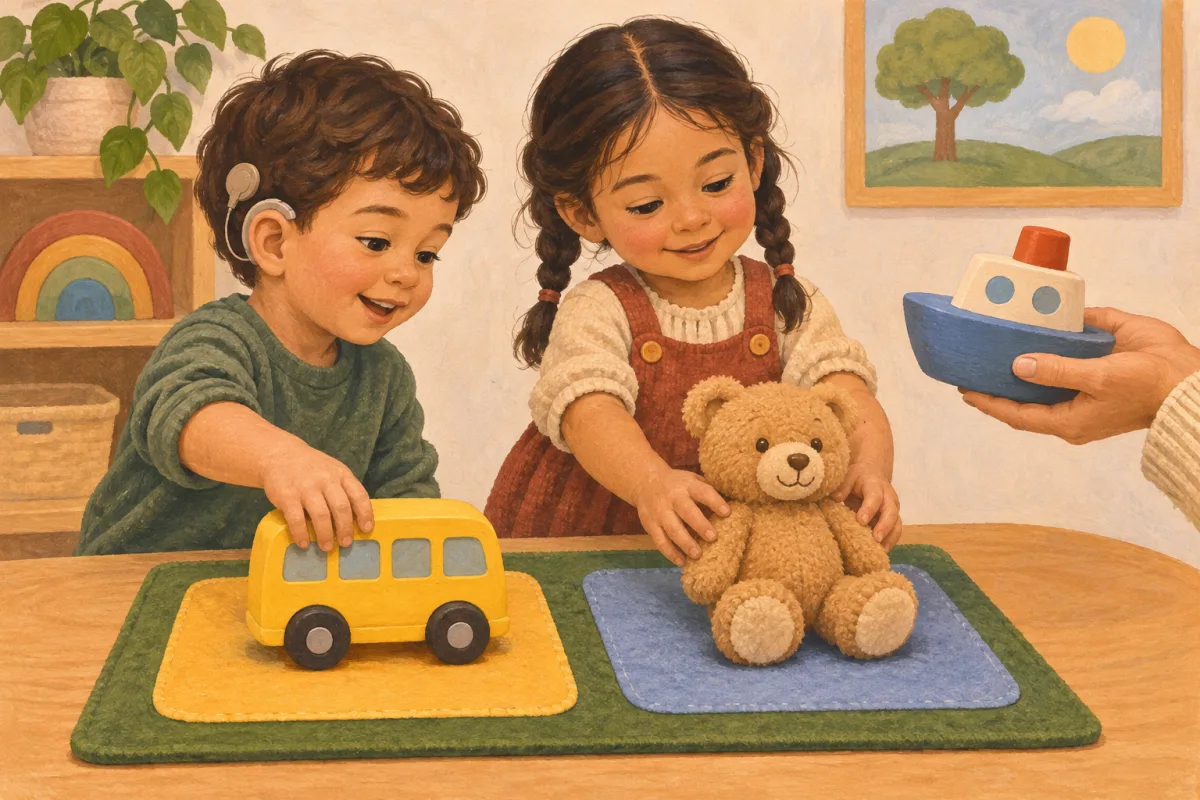
A preschooler can tell you that a bus and a bear are different things. Hearing what those words have in common takes a different kind of attention. Both begin with the sound /b/. A beginning sound game lets your child listen for that shared sound while looking at familiar objects. Gather a few things from the toy shelf or kitchen. Pick objects your child already calls by the names you plan to use.
Model one beginning sound match
Set out a toy bus, a stuffed bear, and a large spoon. Name each object together. Point to the bus and say, “Bus starts with /b/.” Keep the sound short, without adding “uh.” Then say “bear” and point to the bear. Move the bus and bear onto a mat together. Say, “Bus and bear start the same way.”
Pick up the spoon and say its name with a slightly longer /s/ at the start. Ask your child to listen to “bus” and “spoon” and decide whether they begin the same way. If they answer based on what the objects do, go back to saying the words. Make the first sound easy to hear and give them another chance to compare.
Keep the set small while your child listens
Leave the bus on the mat and offer a toy boat and a sock. Ask your child to choose which one starts like “bus.” If they pick the sock, try saying “bus, sock” and “bus, boat.” Pause between the two pairs. You can touch the toy each time you say its name so your child can follow the words without having to remember the whole list.
When you switch sounds, choose one you can stretch, such as /m/ or /s/. Try a mug and a mitten for /m/. The long hum at the beginning makes it easier to compare the sounds. If an object has two common names, use the one your child knows. A child who calls the mug a cup is comparing a different word.
Take the listening game beyond the toy shelf
- Look for a match at cleanup. Say “sock” and ask whether the spoon or the mitten starts with the same sound.
- Trade places. Let your child give you two objects. Say their names and explain what you heard at the beginning of each word.
- Try the game without props. Say two familiar names and ask whether they start alike. Bring the objects back if your child wants help.
Use the same spoken name for each object throughout a comparison. Switching between “cup” and “mug” changes the first sound even though the object stays the same. Focus on what your child hears in the chosen word, then connect a familiar letter when appropriate.
If your child can find a match with a new object, ask them to tell you what the two words have in common. They might repeat the first sound or say both words slowly. For more playful ways to practice listening for sounds, sign up for a guided preschool learning path with KidsOnlineLessons.