KidsOnlineLessons Team · November 9, 2026
A Texture Walk for Toddlers Using Fabric and Cardboard
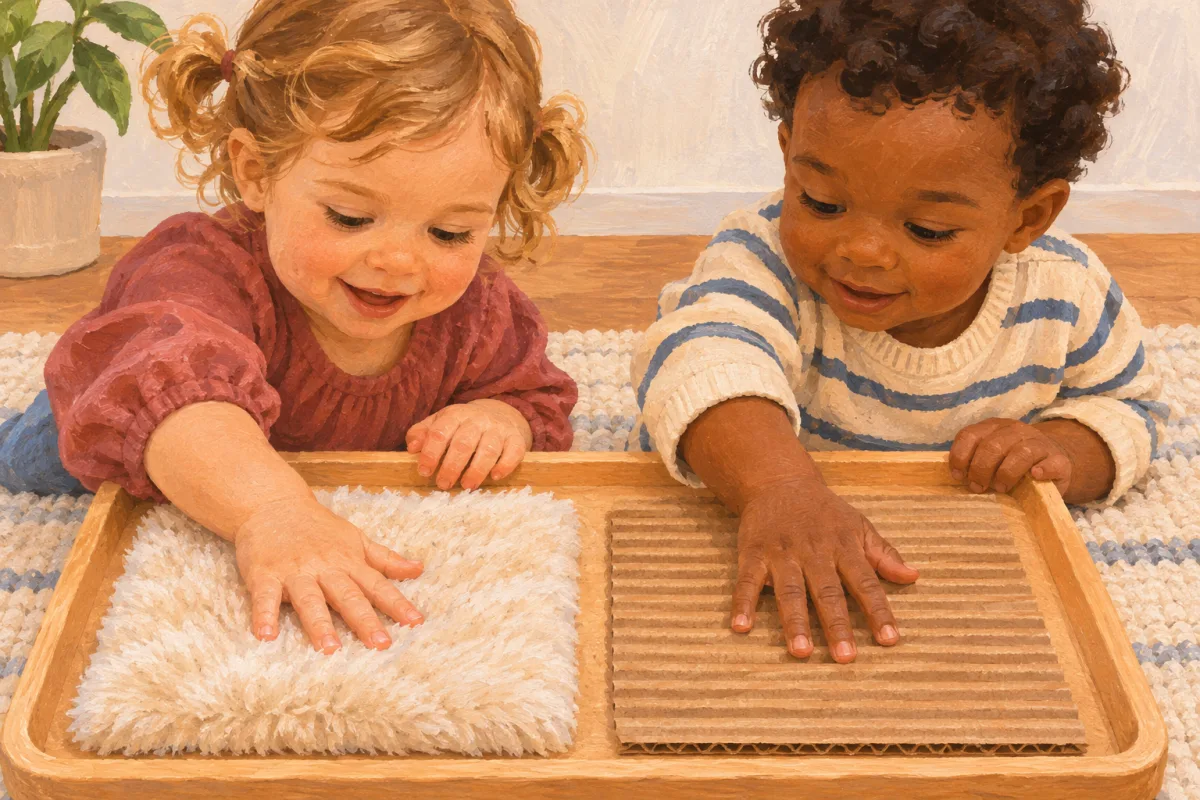
A toddler who rubs a sleeve or runs a finger over a cardboard box is already paying attention to texture. You can turn that interest into a short walk from one material to another. Choose two or three things your child can touch safely. At each stop, give them a chance to feel the surface, hear one word for it, and decide whether to explore further. The walk can fit into one room and last only as long as they want to play.
Set up a short route with contrasting surfaces
Place a fuzzy washcloth on a low table and a clean piece of corrugated cardboard at another reachable spot. Choose cardboard with smooth edges and no staples, tape, or loose pieces. Put a smooth cotton cloth at the last stop if you want a third surface. Stay nearby and use pieces large enough to handle easily.
Start at the washcloth. Run one finger over it and say, “Soft.” Then let your toddler try. They may use one finger, pat the cloth with a whole hand, or pick it up to look more closely. At the cardboard, slide a finger across the ridges and say, “Bumpy.” You can repeat the word if your child keeps exploring, then move to the next stop when they’re ready.
Let your toddler choose how to touch
Some toddlers touch a new surface right away. Others may prefer watching you or nudging it with the end of a wooden spoon. You can say, “The spoon bumps along,” while you show them. If your child pulls their hand away, offer the soft cloth again or let them walk past that stop. They can join in by looking or pointing.
If they spend the whole walk at one material, try exploring a different part of it. Turn the cardboard so the ridges run the other way. Use a finger to feel along a ridge, then across it. Say, “Along here. Now across the bumps.” This gives your child two experiences with the same surface and a reason to try a new movement.
Carry texture words into the rest of the day
- At the towel rack, feel a towel and compare it with a smooth shirt. Use one word for each surface.
- At cleanup, ask whether your toddler wants to carry the soft cloth or the bumpy cardboard back to its place.
- On another day, put the same materials in different spots. See whether your child recognizes one by touching it.
Keep the route optional and comfortable. Your toddler can watch, point, or explore with a safe tool instead of touching a surface directly. Naming their chosen action and respecting a pause can preserve the shared experience without turning sensory exploration into a demand.
If your child later brings you a towel, you can say, “That feels soft like our cloth,” and give them a moment to make the connection. For more ways to pair sensory play with early vocabulary, sign up for a guided toddler learning path with KidsOnlineLessons.