KidsOnlineLessons Team · November 15, 2026
A Mirror Game for Naming Toddler Body Parts
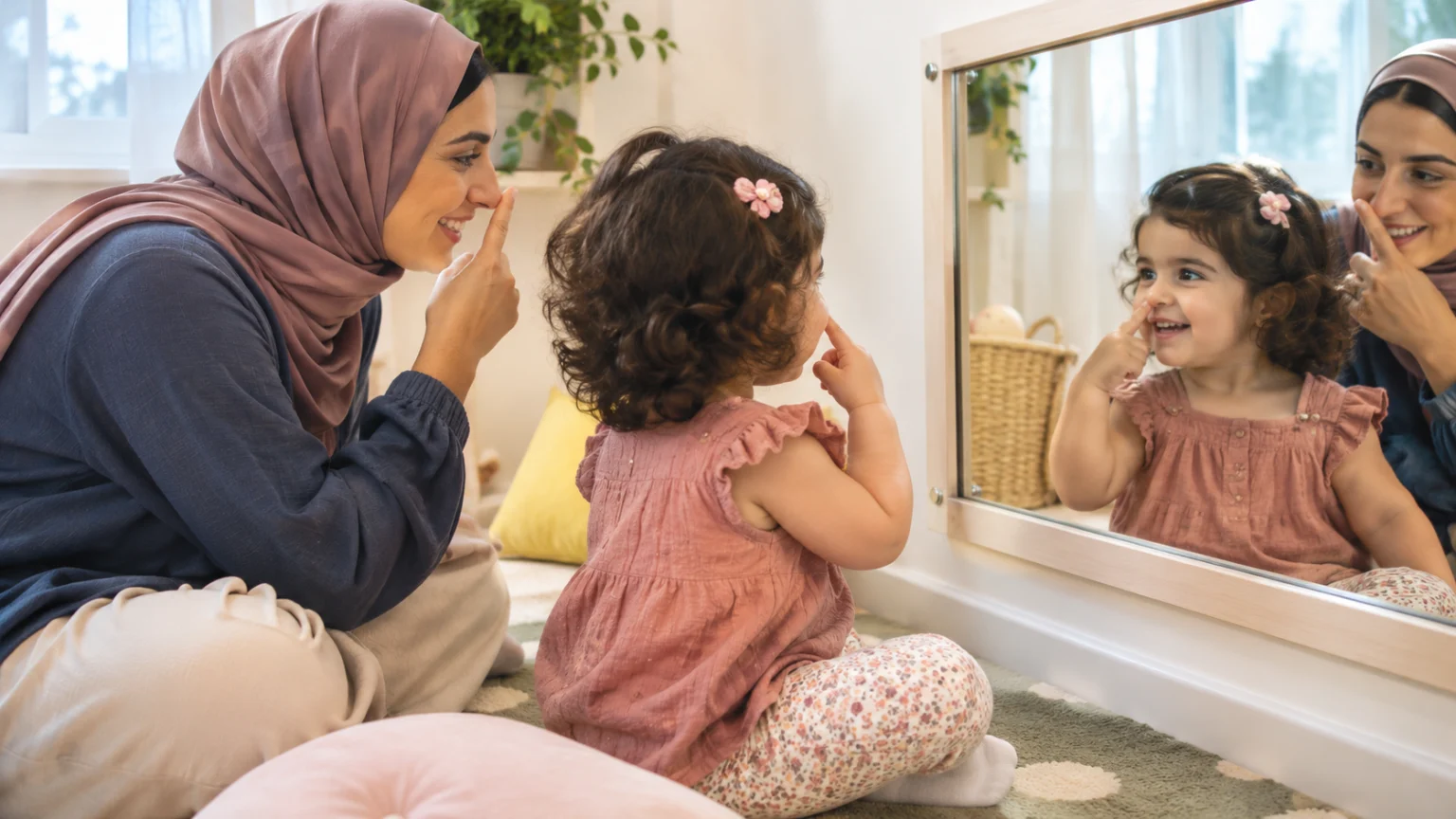
Your toddler may enjoy looking in a mirror long before they can name what they see. A body-part game connects familiar words with visible movements: touching a nose, waving a hand, or wiggling toes. You can follow your child’s attention and offer language without asking them to identify every part on request.
Use a securely mounted, unbroken mirror at a comfortable height. Sit beside your toddler so both reflections are visible. Keep the activity gentle, and model on your own body rather than moving your child’s hands for them.
Begin with one body part and one action
Touch your own nose and say, “My nose.” Pause, then smile at your reflection. Your child may touch their nose, reach toward the mirror, or simply watch. Describe their response: “You found your nose,” or “You are looking at my nose.”
Repeat the same movement before adding another word. A few clear repetitions help connect the sound of the word with what your child sees. You can then lift your hand and say, “My hand waves.”
If your child turns away, follow their lead. The game can last only a minute and still offer a useful shared experience. You do not need to finish a list of body parts.
Invite imitation without requiring a performance
Try a playful action your child already enjoys, such as opening and closing a hand or wiggling fingers. Say, “My fingers wiggle.” Wait for a response before adding another instruction.
You can ask, “Where is your nose?” occasionally, but balance questions with comments. Too many requests can make a pleasant interaction feel like a quiz. If your child does not point, show your own nose again and keep the exchange warm.
Choose a few simple turns:
- Wave a hand and greet the reflection.
- Touch your knees while sitting safely on the floor.
- Wiggle your toes if they are visible and comfortable.
- Make a gentle smile and notice your mouth.
Avoid touching your child’s face without checking their comfort. You can offer a choice: “Shall we wave or wiggle?” A point or movement can tell you which action they prefer.
Carry body-part words into caring routines
Use the same words while washing hands, pulling on socks, or drying after a bath. “The sock goes on your foot” connects the word with a meaningful action your child experiences regularly.
Keep descriptions accurate and respectful. Body-part vocabulary supports ordinary communication about comfort and care, so use the names your family wants your child to understand. You can add new words gradually as they become relevant.
Notice whether your toddler responds during a routine even if they do not join the mirror game. Understanding can appear in different settings and through actions before speech. For more gentle vocabulary activities built around everyday experiences, visit KidsOnlineLessons and sign up for a guided toddler learning path.